Where to eat in Eminönü
A walking food guide to Istanbul's old commercial waterfront — where the city's 1664 spice bazaar still sells saffron and rose buds by weight, the balık-ekmek boats grill mackerel a hundred metres from where Byzantine fishermen sold their catch, the 1871 coffee roaster grinds Turkish coffee on the same machines it always has, and the Sirkeci kebab lane behind the old Orient Express station turns out köfte, cağ kebabı and pide in three rooms that have been at it for decades. Hand-picked. No user reviews. No paid placements.
What Eminönü is, and isn't
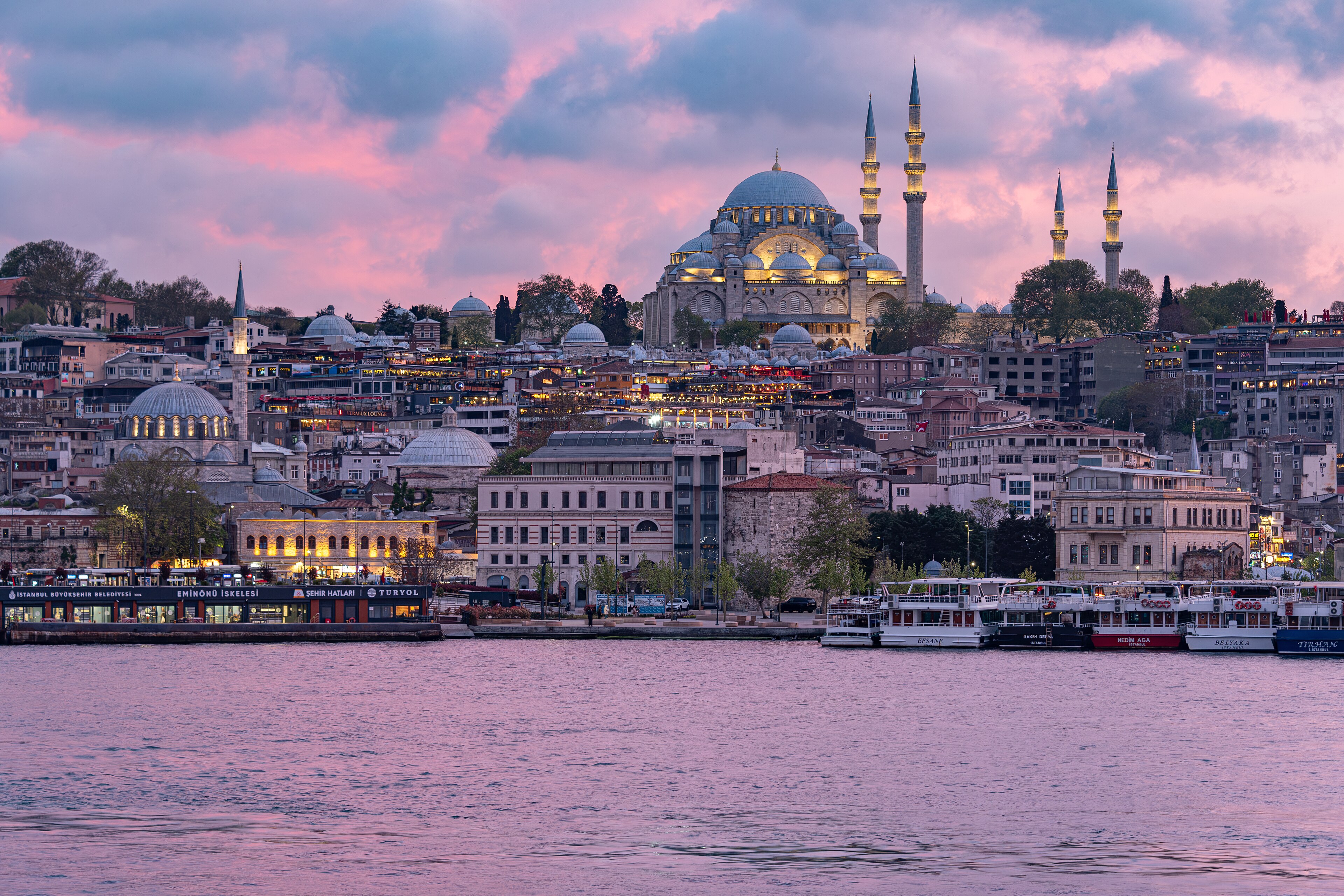
Eminönü is the southern tip of the historic peninsula, where the Golden Horn meets the Bosphorus and the city's old commercial gravity has lived for two thousand years. It was the Byzantine port. It was the Ottoman trade waterfront. It is still where the ferries from the Asian side land, where the Galata Bridge crosses to Karaköy, and where the Yeni Cami's domes and twin minarets — the New Mosque, finished in 1665 — anchor the skyline that every Istanbul postcard photographs. Walk five minutes in any direction and you are in a different century.
What Eminönü isn't, despite being one of the most-trafficked stretches of waterfront in Europe, is a tourist-trap food desert. The Spice Bazaar fills with daytrippers by 11 am, but the streets behind it — Hasırcılar Caddesi, Hamidiye Caddesi, Tahmis Sokak — are where Istanbullular have done their spice and coffee shopping for centuries, and they still do. The balık-ekmek boats serve the same grilled mackerel sandwich to commuters off the Kadıköy ferry as they do to first-time visitors. The Sirkeci kebab houses behind the old train station feed lawyers, civil servants, and railway workers at lunch. The food is correct because the customers are local.
This guide names them. Every venue below has been chosen for one of four reasons: a generational connection to Eminönü's commercial food culture, technical excellence in a single dish, a setting that is itself a reason to visit, or a role in the long Istanbul institution of buying spices, coffee or sweets from the same shop your grandmother bought from. There are no paid placements.
🗺️ Want this as a walking tour?
The free Taste Istanbul app maps two five-stop walking tours that start on the Eminönü waterfront — the Eminönü Fish & Spice Trail (3 hours, the historic-peninsula morning walk: the balık-ekmek boats → Midyeci Ahmet → the 1871 coffee roaster → the 1664 Spice Bazaar → Pandeli 1901 above the bazaar gate) and the Bosphorus Seafood Trail (4 hours, the afternoon-into-evening fish day: the balık-ekmek boats → the Galata Bridge fish meyhanes → a Karaköy neighbourhood balıkçı → a Bosphorus ferry up to Arnavutköy for Adem Baba and Set Balık on the waterfront quay). The Istanbul Kebab Trail also opens here, on Hamdi's rooftop above the Spice Bazaar, before working through the Sirkeci charcoal grills. Offline mode and one-tap directions to every venue below.
Download Taste Istanbul on the App StoreThe five things to eat in Eminönü
1. Balık ekmek at the iskele
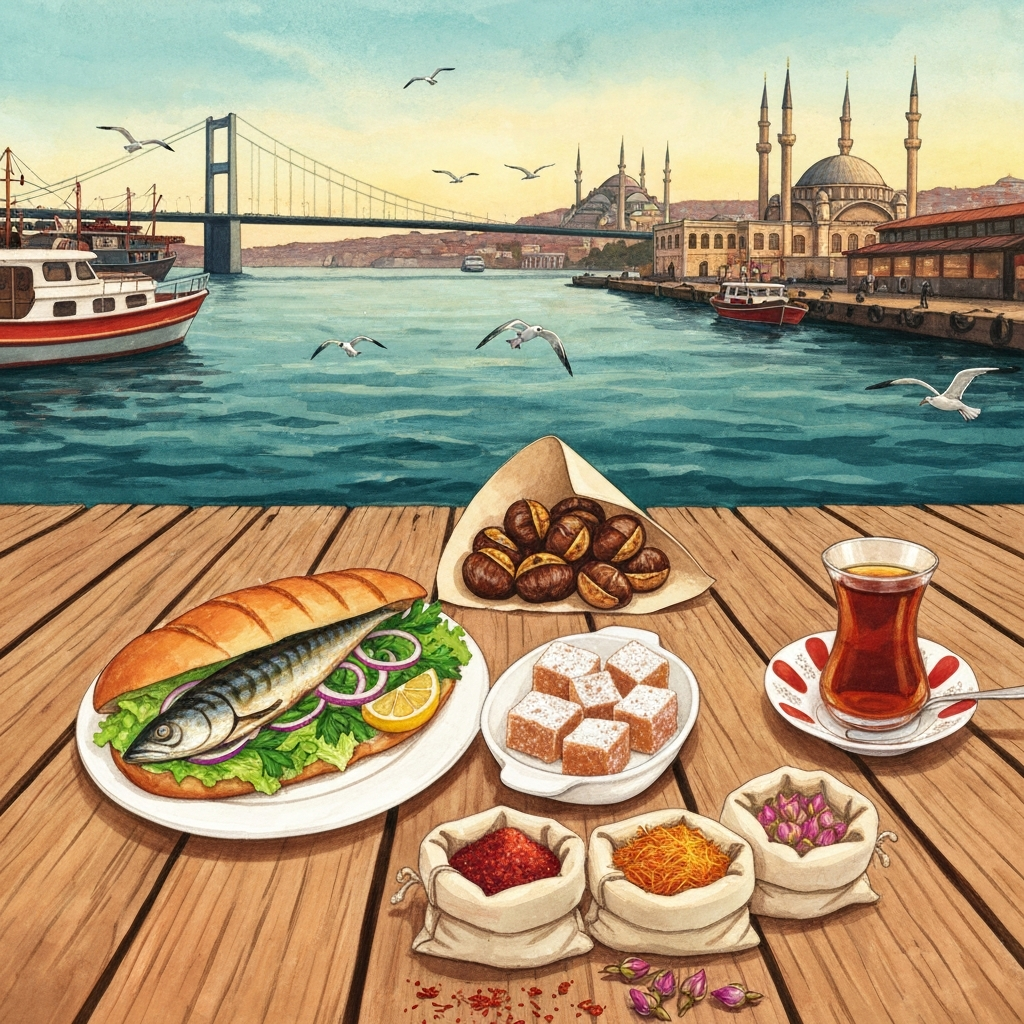
The defining Eminönü dish is balık ekmek — a fillet of grilled mackerel on a quarter-loaf of crusty bread with thinly sliced raw onion, fresh parsley, lettuce, and a hard squeeze of lemon. The classic version is sold off the Tarihi Eminönü Balık Ekmek Tekneleri — the brightly painted boats moored at the Eminönü waterfront, where the grills run from morning until late evening and the sandwich is handed across the rail wrapped in butcher's paper. Eat it standing, looking at the Galata Bridge. Add a small paper cup of pickled-juice (turşu suyu) from the cart twenty metres along, and — if it's cold — a cup of salep from a vendor on the waterfront. Round it out with midye dolma (rice-stuffed mussels with lemon) from Midyeci Ahmet on Eminönü Meydanı, the city's reference midye cart. For the same fish in a sit-down room with a cold-meze table and a wine list, Tarihi Galata Köprüsü Balıkçısı under the bridge is the upgrade.
2. The Spice Bazaar (Mısır Çarşısı, 1664)
The Mısır Çarşısı — the Egyptian Spice Bazaar, finished in 1664 and funded by duties on the Cairo trade — is one of the oldest covered markets in the world still operating in its original purpose. The interior is a cross-shaped vaulted hall, six entrance gates, eighty-eight numbered shops, the air thick with the smell of dried herbs and ground spice. The pace is performative — vendors call out, hand you saffron threads to smell, press cubes of lokum on you to taste — and it works on visitors. The reference stalls inside are Arifoğlu Baharat on Hasırcılar Caddesi (the spice merchant the city's chefs actually source from), Malatya Pazarı at No. 41–44 (the dried-fruit and Turkish-delight specialist), and Bab-ı Hayat at No. 39 (the sit-down kebab room inside the bazaar itself). Buy çörek otu (nigella seed), sumak, pul biber in flake and powder, dried rose buds for tea, Antep pistachios still in the shell. Skip the saffron unless you know what fresh saffron threads smell like — there are imitations.
3. Coffee, lokum, and the sweets dynasties
Two of the world's longest continuously operating food businesses are a hundred metres apart in Eminönü. Kurukahveci Mehmet Efendi on Tahmis Sokak has been roasting and grinding Turkish coffee since 1871; the queue out the door is part of the ritual and the brass grinders behind the counter have not changed in a century. Order a quarter-kilo of medium-ground Turkish coffee for the cezve at home; it ships well. Ali Muhiddin Hacı Bekir on Hamidiye Caddesi is the lokum dynasty founded in 1777 — they invented the modern recipe for Turkish delight in this neighbourhood, and the Hamidiye shop is the original family location (the What is lokum? primer has the longer treatment of the dish and the story of how the English name "Turkish delight" entered the language from this very shop in the 1830s). The classic gül lokumu (rose), the fıstıklı lokum (Antep pistachio), and the kaymaklı lokum (clotted cream) are the three to take home. For pastry, Şekerci Cafer Erol Sirkeci a few minutes inland runs the Sirkeci branch of the 1807 Kandilli confectioner — fondants, almond paste, hand-pulled pişmaniye (Turkish floss halva). The Eminönü waterfront's own old patisserie, Tarihi Eminönü Pastanesi on Hamidiye Caddesi, is the morning kahvaltı stop locals actually use.
4. The Sirkeci kebab and köfte cluster
Five minutes inland from the bazaar, behind the 19th-century Sirkeci Garı (the Istanbul terminus of the original Orient Express, 1890), a short pedestrianised lane called Hocapaşa Sokak holds one of the densest concentrations of grill rooms in the old city. Filibe Köftecisi at No. 3/B has been serving the same plate since 1893: hand-shaped grilled köfte, white-bean piyaz, pickled chillies, charred green peppers, and bread that arrives hot. Around the corner, Şehzade Cağ Kebabı on Hüdavendigâr Caddesi specialises in the Erzurum-style cağ kebabı — marinated lamb stacked on a horizontal spit and shaved onto warm lavaş with roasted onion and sumac, a dish that originates a thousand kilometres east. Hocapaşa Pidecisi next to Filibe is the wood-fired pide room — boat-shaped flatbread closed at the ends, filled with cured beef, spiced lamb, or egg-and-cheese. Develi Kebap Sirkeci on Hocapaşa Mahallesi is the Eminönü branch of the Gaziantep institution — pistachio-bound kebabs, lahmacun, künefe to finish. Bereket Döner Sirkeci and Ali Ocakbaşı Sirkeci on the same lane round the cluster out. One short street, six rooms, a working lunch.
5. Pandeli (1901) above the Spice Bazaar
Pandeli Restaurant sits upstairs at the Spice Bazaar's main gate, in a small suite of rooms tiled wall-to-ceiling in turquoise and cobalt İznik ware. The restaurant has been serving Ottoman-Greek cooking from the same address since 1901. The kitchen runs a short menu that has barely moved in a century: lamb in eggplant purée (hünkar beğendi), yoğurtlu kebab, sea bass baked in paper, stuffed courgette flowers, the day's stews from a counter. The room is small, the windows look down on the bazaar's main entrance, the lunch service is the right service. Reservations are sensible at peak. For a more contemporary kebab dinner with a roof view of the Galata Bridge and the Bosphorus, Hamdi Restaurant on Tahmis Caddesi runs a five-floor Gaziantep-style pistachio-kebab house with a top-floor dining room that is one of the better waterfront views in the old city. Tarihi Balıkçı Sabahattin over towards the Cankurtaran side is the formal fish-meyhane equivalent — an Armenian-Turkish institution in a quiet nineteenth-century townhouse, with one of the longest cold-meze tables in Istanbul.
How to plan a day around food in Eminönü
Eminönü is an afternoon district more than a full day — the bazaar runs on a 9–7 schedule, and the best hours are between 11 and 5 before the cruise-ship crowds peak. A working sequence, drawn from the Eminönü Fish & Spice Trail in the app:
- 11 am. Tarihi Eminönü Balık Ekmek Tekneleri — a balık ekmek standing at the rail of the iskele, watching the Galata Bridge open for ship traffic.
- 11:30 am. Walk inland to the Mısır Çarşısı. Plan an hour. Buy spices, dried fruit, lokum. Drop into Arifoğlu Baharat on Hasırcılar Caddesi for the chef-grade version of whatever you're after.
- 12:30 pm. Lunch upstairs at Pandeli at the bazaar's main gate, or — if you want kebab — Hamdi Restaurant on the top floor with the bridge view, or walk to Sirkeci for Filibe Köftecisi on Hocapaşa Sokak. Each is correct for a different mood.
- 2 pm. Coffee at Kurukahveci Mehmet Efendi on Tahmis Sokak. Buy a quarter-kilo for home; the queue moves quickly. A small cup of Turkish coffee from the side counter while you wait.
- 3 pm. Ali Muhiddin Hacı Bekir on Hamidiye Caddesi for lokum from the 1777 original. Take three flavours minimum — rose, pistachio, clotted cream.
- 4 pm. Walk across the Galata Bridge on foot. The bridge is twenty minutes end to end if you stop for the view; the fishermen line both rails, the ferries pass under, and Karaköy opens up on the other side for tea or a coffee somewhere quieter.
The full route is mapped in the Taste Istanbul app with walking directions, distances, and per-stop notes — free, offline, no sign-in.
Other districts to combine with Eminönü
Eminönü is the hinge between three of Istanbul's food districts. A well-planned three-day food trip pairs it with:
- Sultanahmet — five minutes uphill from the Spice Bazaar, the historic peninsula's monumental quarter. Ottoman dawn breakfasts, the 1920 köfte institution on Divanyolu, and the Hagia Sophia–Blue Mosque axis.
- Karaköy — a fifteen-minute walk across the Galata Bridge, the port-side dining neighbourhood at the foot of Galata. The 1949 baklava reference, modern Anatolian fine dining at Neolokal, and the third-wave coffee culture.
- Kadıköy — a 20-minute Bosphorus ferry from the Eminönü iskele to the Asian side, home to Çiya Sofrası and the city's most eclectic produce market. The crossing leaves from the same waterfront the balık-ekmek boats moor at.
- Beşiktaş — a 25-minute Bosphorus ferry north up the European shore. Van-style kahvaltı in the Çarşı, the marketplace köfte, and the Çırağan Palace dining room.
- Üsküdar — a 20-minute Bosphorus ferry across to the Asian side. Kanaat Lokantası since 1933, the börek-and-muhallebi street, and the Salacak waterfront with the Maiden's Tower in front.
- Balat — fifteen minutes up the Golden Horn from the Spice Bazaar, the painted-timber-house neighbourhood historically home to the city's Sephardic Jewish, Greek-Orthodox, and Armenian communities. Historic meyhanes, a bakery street, restored-Ottoman artisan cafés, and the Golden Horn fish lokantas.
The full guide is in the app.
Every venue named here, plus 20+ more across Eminönü alone — and 230+ across the rest of the city — is mapped, addressed, and walked in the free Taste Istanbul app.
Download free on the App Store