Home › Walking food tours › Eminönü Fish & Spice Trail
Eminönü Fish & Spice Trail
Five stops, three hours, 1.9 km along the historic peninsula's commercial waterfront — the balık ekmek boats at the Eminönü iskele, the stuffed-mussel ritual on the square, Kurukahveci Mehmet Efendi roasting Turkish coffee on the same corner since 1871, the cavernous L-shaped Mısır Çarşısı built in 1664 as part of the Yeni Cami complex, and lunch above the bazaar gate at Pandeli, in continuous operation in its turquoise-tiled first-floor dining room since 1901.
Difficulty: Easy · Best started: 11:00 am · Tour ID:
eminonu-fish-spice
What this tour is for
The Eminönü Fish & Spice Trail is the long historic- peninsula morning — the three-hour walk that anchors everything Istanbul has historically been good at: cheap fresh fish on the waterfront, four-centuries-old spice trading under a vaulted Ottoman ceiling, and the single coffee roaster that has perfumed the same Eminönü square for 150 years. It is the most historically-dense walk in the catalogue. By the second hour you have eaten a fish that was on a boat that morning, you have walked under a ceiling that was painted while the Treaty of Westphalia was being signed, and you have bought a quarter-kilo of dark- roasted Turkish coffee from a counter that has been grinding it on that corner since the year the Bombay Stock Exchange opened.
Best for: travellers who want the historic-peninsula Istanbul in a single morning before the Sultanahmet monument crawl. Anyone planning a coffee or spice-shopping run home. Walkers who prefer to start the day on the water. Easy walking the whole way — the five stops sit inside a 1.9-kilometre rectangle bounded by the Eminönü iskele on the north, the Mısır Çarşısı on the south and the Yeni Cami in between. Reservations: book Pandeli a day ahead at peak; everything else is walk-in. Pair naturally with the Eminönü district guide for the long-form context on every venue.
The route
Stop 1 — Balık ekmek at the Eminönü iskele · 11:00 am
Address. Eminönü Sahili (Waterfront), Eminönü. Two minutes' walk from the Eminönü tram stop or the Galata Bridge, on the Golden Horn shore directly in front of the New Mosque (Yeni Cami).
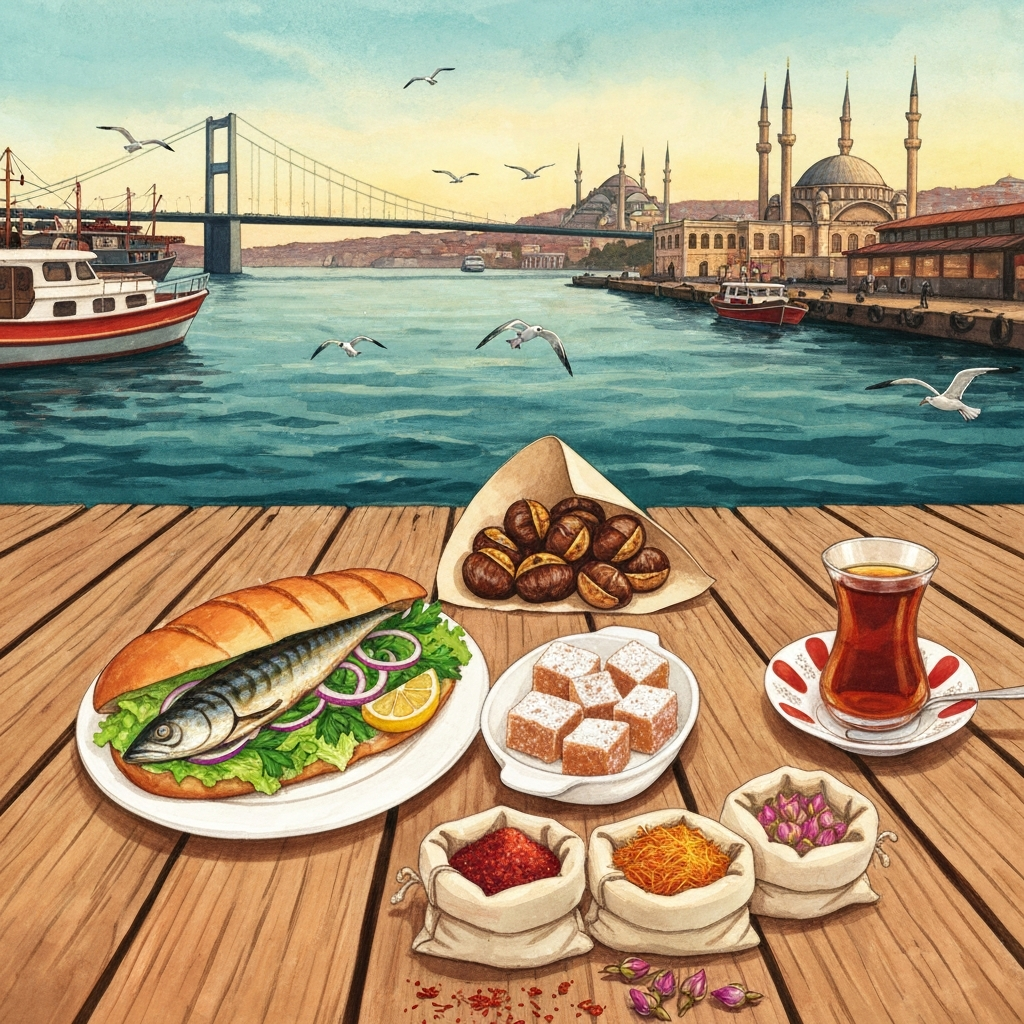
Begin at the water. The Tarihi Eminönü Balık Ekmek Tekneleri are four ornately decorated wooden boats moored at the Eminönü iskele on the Golden Horn — gold-painted, rocking gently in the wake of every passing ferry, with their grills running open-flame from morning to early evening. The cooks grill fresh mackerel (uskumru) over charcoal in batches, slide each filleted fish into a half-baguette of crusty bread with onion rings, shredded lettuce, and a hard squeeze of lemon, and hand it to you wrapped in paper. The whole transaction costs less than a coffee and is one of the city's defining tastes. Eat standing, with the bread tilted away from you and the juice running down the paper — there is no sit-down version of this meal and you do not want one.
Order: one balık ekmek, lemon and onion both, a paper cup of cold ayran (the salty yoghurt drink) from a vendor on the waterfront. Twenty minutes; do not order two — the procession ahead is long.
Stop 2 — Midyeci Ahmet on the square · 11:30 am
Walk. 3 minutes (160 m) south across the Eminönü tram tracks onto the open Eminönü Meydanı in front of the New Mosque steps.
Cross the tram lines to the square and find Midyeci Ahmet, the city's reference midye dolma (stuffed-mussel) counter, with its glass-fronted tray of black-shelled mussels piled in pyramids and a single attendant working at extraordinary speed. The drill: hold up the number of fingers for how many mussels you want (a dozen is the standard order for two), the attendant prises each shell open with the upper half as a spoon, presses the spiced-rice-and-currant-and-pine-nut filling against the meat, hands it to you over the counter; you squeeze the half-lemon over the open shell and eat it on the spot, scraping the inside of the shell clean with the upper half. Then you hand the empty shell back and the attendant ticks your tally up by one. Stand-and-eat. The salt- spice-citrus-rice combination is one of the city's great fast-food rituals.
Order: a dozen midye dolma to share between two; pay at the end against the counted tally. Twenty minutes.
Stop 3 — Kurukahveci Mehmet Efendi on Tahmis Sokak · 12:00 pm
Walk. 4 minutes (250 m) south-west around the eastern flank of the Yeni Cami and down Tahmis Sokak toward the Spice Bazaar's western entrance.
Before you see the Spice Bazaar you smell the coffee. Kurukahveci Mehmet Efendi at Tahmis Sokak No. 66 — the corner the family has been roasting on since 1871 — perfumes the Eminönü square with a continuous cloud of fresh-ground dark-roast Türk kahvesi the way no other corner in the city does. The queue forms early; the line moves quickly. The order at the counter is a half-kilo paper bag of their signature blend (the green-and-cream paper bag with the family crest is the single best souvenir to take home from Istanbul, and is light, vacuum-sealed, and tolerated by every customs agent in every arrivals hall). For drinking now: walk around the corner to the standing counter on the Hasırcılar side, order one orta (medium-sweet) Türk kahvesi, drink it espresso-sized at the marble counter while the queue inside fills your bag. The full 460-year arc of Turkish coffee — from the 1554 Tahtakale coffeehouse through this roaster to the 2010 third-wave Karaköy renaissance — is in our Best Turkish coffee in Istanbul blog post.
Order: a half-kilo bag of the signature blend to take home; one orta Türk kahvesi at the standing counter to drink now. Twenty minutes.
Stop 4 — Mısır Çarşısı (the Spice Bazaar) · 12:30 pm
Walk. 1 minute (90 m). Step through the western Hasırcılar gate of the Mısır Çarşısı directly opposite the roaster.
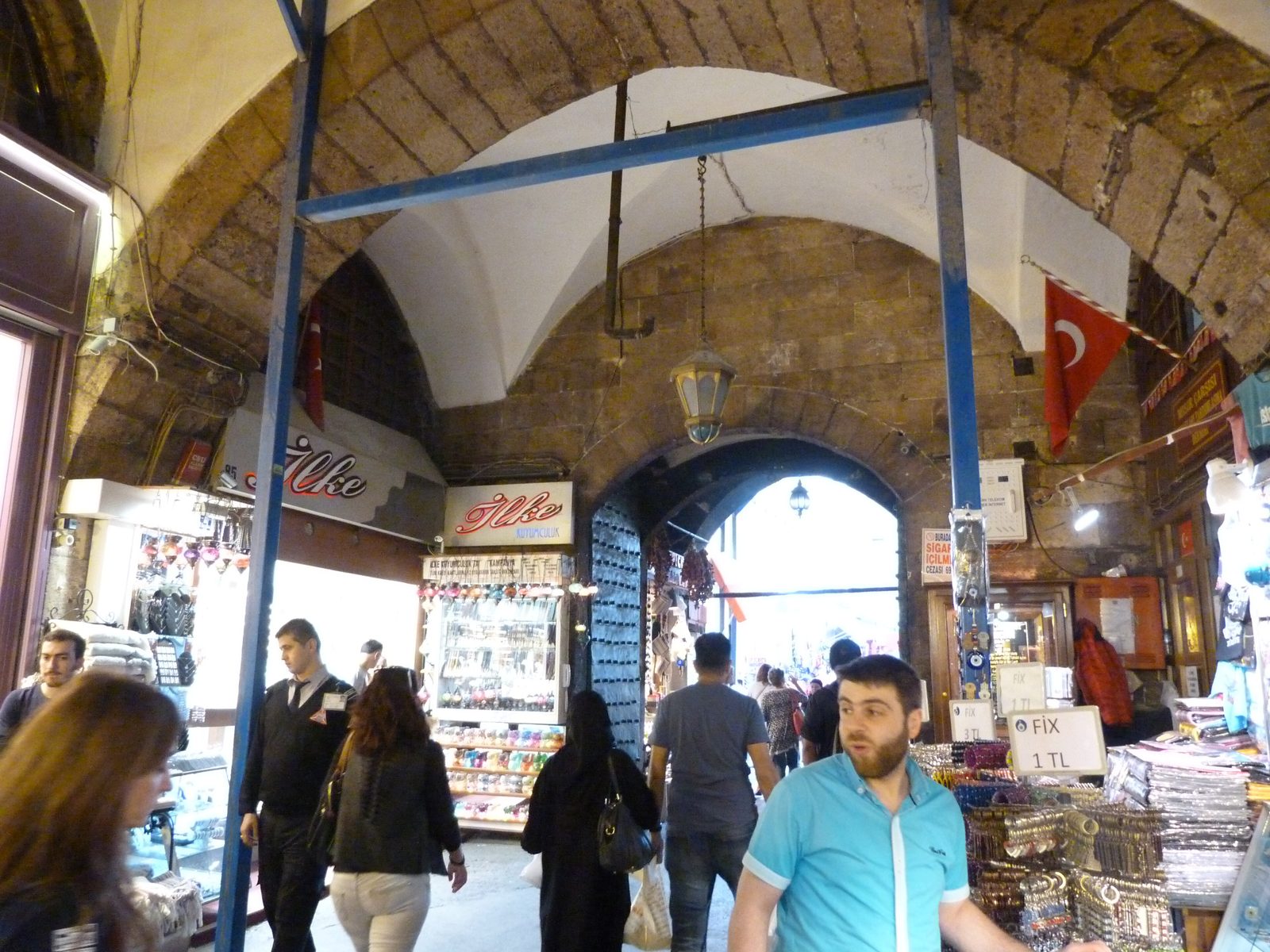
Step out of the sunshine into the vaulted L-shaped cavern of the Mısır Çarşısı — built in 1664 as part of the Yeni Cami complex, financed historically by the Egyptian-tribute trade (the Mısır in the name is the Ottoman Turkish word for Egypt, not for corn). Under the painted barrel-vault ceilings, more than eighty stalls run along the two arms of the L, selling saffron in small glass jars, the dark-purple Urfa isot pepper, sumac in coarse-ground crystals, dried Anatolian figs threaded on string, Antep-pistachio paste in tin cans, three or four grades of Anatolian honey from blossom to chestnut to pine, and every conceivable variety of lokum. Vendors expect you to taste — accept the small wooden spoon when it is offered. Two venues to find inside the bazaar are worth naming. Malatya Pazarı at No. 41–44 is the long-established Anatolian-dried-fruit counter — the dried figs and apricots from Malatya are the reference. Arifoğlu Baharat on Hasırcılar Caddesi just outside the bazaar's western flank is the spice-merchant family with fifty years on the same corner; their pre-ground saffron and their five-pepper mix are the easiest take-home spice gifts. For the 1777 lokum dynasty that defines Turkish delight, walk one block north after the bazaar to Ali Muhiddin Hacı Bekir on Hamidiye Caddesi — the original 1777 family shop is still in operation and is covered in detail in the Eminönü district guide.
Order: a 100-g bag of saffron threads at Arifoğlu Baharat; a 200-g box of rose-and-pistachio lokum at any of the bazaar's sweet stalls (vendors will let you taste three or four varieties before choosing); a small tub of Antep-pistachio paste for the journey home. Thirty minutes inside the bazaar — longer is fine but Pandeli's lunch service peaks at 1.
Stop 5 — Pandeli, above the bazaar gate · 1:00 pm
Walk. Climb the stone staircase immediately inside the main (eastern) gate of the bazaar — Pandeli is on the first floor directly above. 30 seconds.
The closing stop is the room you came for. Pandeli Restaurant has been in continuous operation in its turquoise-tiled, domed-ceiling dining room since 1901 — the original founding family was an Eastern-Orthodox Greek (Rum) restaurateur dynasty from the same generation of historic-peninsula non-Muslim restaurants as the Adriatic Greek meyhanes of the Galata Bridge underneath; the room itself is among the city's three most handsome restaurant interiors. The kitchen runs a classical Ottoman-Greek-Istanbullu programme: the cold meze trolley arrives at the table on wheels so you can select from a dozen small dishes (the sliced lakerda, the imam bayıldı, the smoked-aubergine patlıcan salatası, the green-walnut tarator); the warm starters include a fried-aubergine-and-yoghurt plate that is the kitchen's signature; mains run to whole- grilled levrek (sea bass) with tarator sauce, the slow-cooked lamb güveç in the clay pot it was cooked in, and the buttered prawn casserole. The sour-cherry pudding is the dessert order. The bill is higher than the rest of the trail combined and is worth it once. Book a day ahead at peak.
Order: the cold meze trolley (select four); the fried-aubergine-and-yoghurt warm starter; whole-grilled levrek with tarator for two, or the lamb güveç for one; the sour-cherry pudding to close; a glass of Turkish white wine or a small carafe of rakı with water and ice. Plan ninety minutes minimum; two hours is fine.
What to bring
- Cash for the first three stops, cards for Pandeli. Balık ekmek, the mussel counter and the roaster's standing-counter coffee are cash-only at the cheapest end (a 20-lira note covers the lot); inside the Spice Bazaar most stalls take cards but small purchases run faster on cash. Pandeli takes cards.
- Comfortable walking shoes. The 1.9-km route is short but the Eminönü cobbles and the polished marble inside the Spice Bazaar are uneven; sneakers or flat leather walking shoes are the right footwear.
- An empty small tote bag. You will buy a half-kilo of coffee, a 100-g bag of saffron, a box of lokum, and probably a small jar of pistachio paste. A folded canvas tote in your day-bag carries them all the way back to the hotel without crushing.
- The Taste Istanbul app, downloaded before you start. Walking directions between stops are mapped, work offline, do not need a SIM.
Practical notes
- Best day. Tuesday through Friday. Saturday is the busiest day in the Spice Bazaar — the crowds inside the vaulted halls slow the walk meaningfully. Sunday is also fine but Pandeli is closed.
- Best season. Year-round. The balık-ekmek boats run rain or shine; the Spice Bazaar is covered; Pandeli is climate-controlled. October–April has the sharpest Golden Horn light at the iskele and the smallest crowds inside the bazaar. July–August is the only season to think twice about — Eminönü Meydanı gets very hot in midday sun.
- Reservations. Pandeli: a day ahead at peak, walk-in fine on Tuesday–Wednesday lunch. Everything else: walk-in.
- Avoid. Major Islamic holidays (Eid al-Fitr / Ramazan Bayramı and Eid al-Adha / Kurban Bayramı) when the family-run rooms close for two to three days, and the first Friday-noon hour during Ramadan when the Eminönü Meydanı fills with prayer rugs in front of the Yeni Cami.
Pair this tour with
- Where to eat in Eminönü — the long-form district guide for context on every venue here, plus the 1777 Hacı Bekir lokum dynasty around the corner, the meyhane row under the Galata Bridge arches, and the Sirkeci kebab-and-pide block one street east.
- Best Turkish coffee in Istanbul — the 460-year arc from the 1554 Tahtakale coffeehouse through Stop 3's 1871 Mehmet Efendi roaster to the 2010 Karaköy third-wave renaissance. Shipping this tour closes the linking loop the coffee post opened.
- Sultanahmet at Dawn — the historic-peninsula morning counterpart on the south side of the same neighbourhood. Pair the two as a single Istanbul day: Sultanahmet at Dawn (6 am – 10 am) → Eminönü Fish & Spice (11 am – 2 pm) → afternoon nap → an evening tour across the Golden Horn.
- Walking food tours of Istanbul: which one's right for you — the meta-guide to all 16 tours, sorted by intent.
Walking directions, offline.
The full Eminönü Fish & Spice Trail route is mapped in the Taste Istanbul app — turn-by-turn directions between every stop, downloaded once and run offline thereafter. Free, no sign-in.
Download Taste Istanbul on the App Store