Where to eat in Üsküdar
A walking food guide to the Asian-side counterpart of Beşiktaş — quieter, older, more conservative, and arguably better-priced. Home to a lokanta institution that has been cooking the same kazan-stews since 1933, a single street of börek and muhallebi shops that defines Istanbul's morning pastry tradition, waterfront köfte rooms where the Maiden's Tower sits a hundred metres in front of you, and the long string of Bosphorus villages that run north from the iskele. Hand-picked. No user reviews. No paid placements.
What Üsküdar is, and isn't
Üsküdar is the second of Istanbul's three great Asian-side districts, sitting directly across the Bosphorus from Beşiktaş and Karaköy. A 15-minute ferry crossing from the European shore drops you at the Üsküdar iskele, where the rhythm of the city changes — the pace slows by a half-step, the call to prayer comes from the Mihrimah Sultan Camii on the square instead of the Hagia Sophia across the water, and the food is built around continuity rather than reinvention. Üsküdar's reputation is for the conservative, the traditional, and the deeply local: this is where Istanbullular come when they want the city's old food without the European-side performance.
What Üsküdar isn't is a fine-dining district. There is no Çırağan Palace here, no Neolokal, no rooftop chef table. What there is, in compensation, is a string of century-old kitchens that have been doing one thing well for ninety years, and a waterfront that reads — looking back across the strait at the Sultanahmet skyline at sunset — like a postcard written before the Bosphorus bridges existed. The long string of villages north of the iskele (Kuzguncuk, Beylerbeyi, Çengelköy) extend the district into a half-day's eating along the water. None of this requires anything of you. It rewards the walk.
This guide names them. Every venue below has been chosen for one of four reasons: a generational connection to Üsküdar's food culture, technical excellence in a single dish, a waterfront setting that is itself a reason to visit, or a role in the long Asian-shore tradition that runs from the iskele up the Bosphorus to the second bridge. There are no paid placements.
🗺️ Want this as a walking tour?
The free Taste Istanbul app maps the Üsküdar Asian Heritage Trail — five stops, three hours, from the 1933 Kanaat Lokantası through the börek-and-muhallebi street and the 1935 Saray muhallebici, up the coast to the Çengelköy plane-tree tea garden, and ending with dinner inside the Maiden's Tower at sunset. Offline mode and one-tap directions to every venue below.
Download Taste Istanbul on the App Store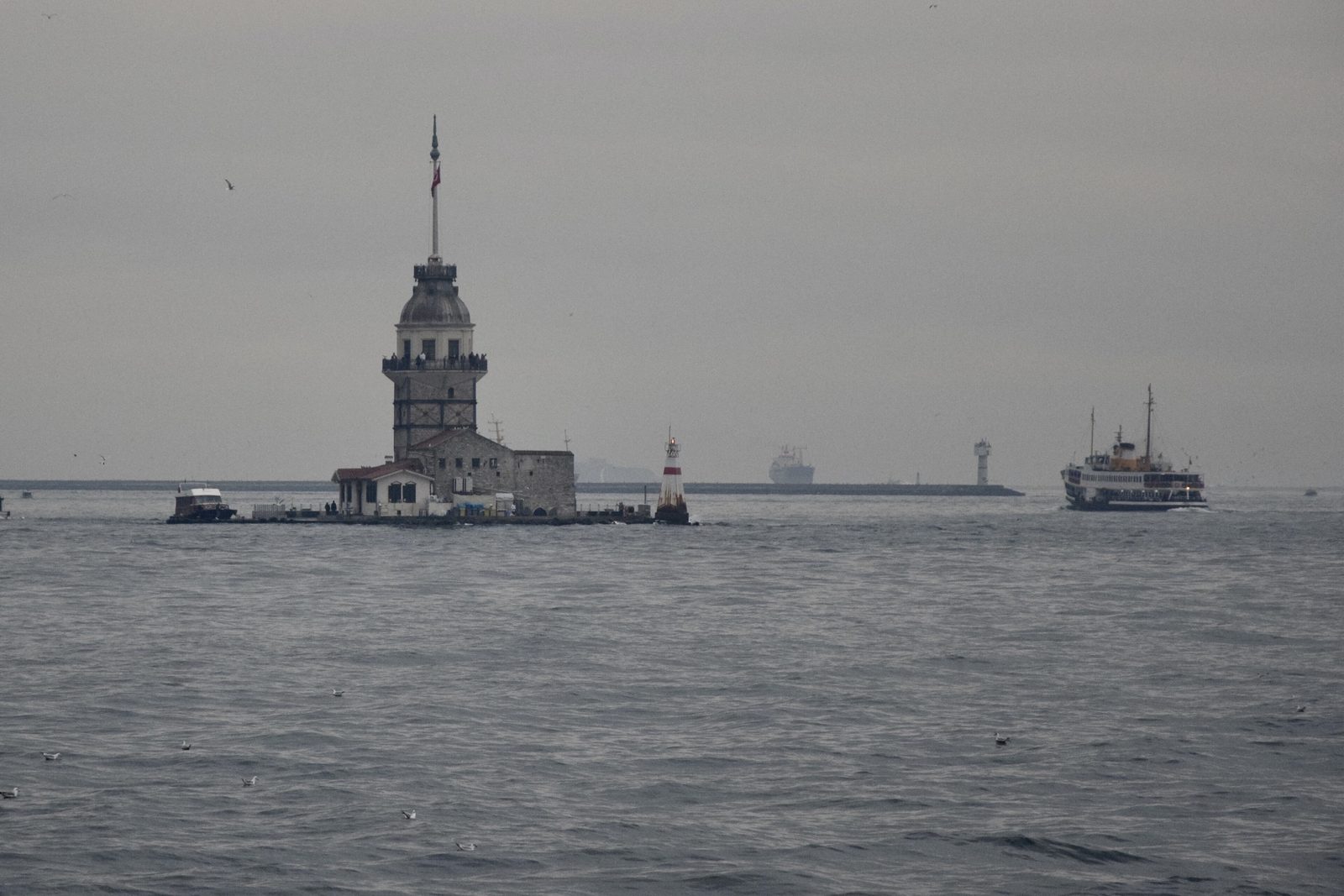
The five things to eat in Üsküdar
1. Kanaat Lokantası since 1933
Kanaat Lokantası on Selmanipak Caddesi is the defining Üsküdar address. Opened in 1933 and run by the same family for almost a century, the room is a long bright traditional lokanta with a glass-fronted steam counter at the front, a wood-panelled dining room behind, and a menu that has barely moved in three generations. Walk in, look at the counter, point at the day's cooking: kuzu kapama (lamb slow-braised with spring greens), nohutlu pilav (rice with chickpeas and tender lamb), türlü (the Anatolian summer-vegetable stew), kuru fasulye (white beans in tomato), and a long rotation of zeytinyağlılar (cold olive-oil dishes). The desserts are the point too: the kazandibi (caramelised milk pudding with a thin scorched crust on the bottom) is one of the city's reference versions and the tavuk göğsü (the famous Ottoman milk pudding made with shredded chicken breast — don't ask, just order it) is the dish that travellers either fall in love with or never speak of again. For the same school of cooking in a quieter room, Niyazibey Köftecisi a few minutes north on Hakimiyet-i Milliye Caddesi runs a meat-driven counterpart, and Asya Restaurant on the Üsküdar Meydanı is the worker's-lunch version on the square.
2. The börek-and-muhallebi street
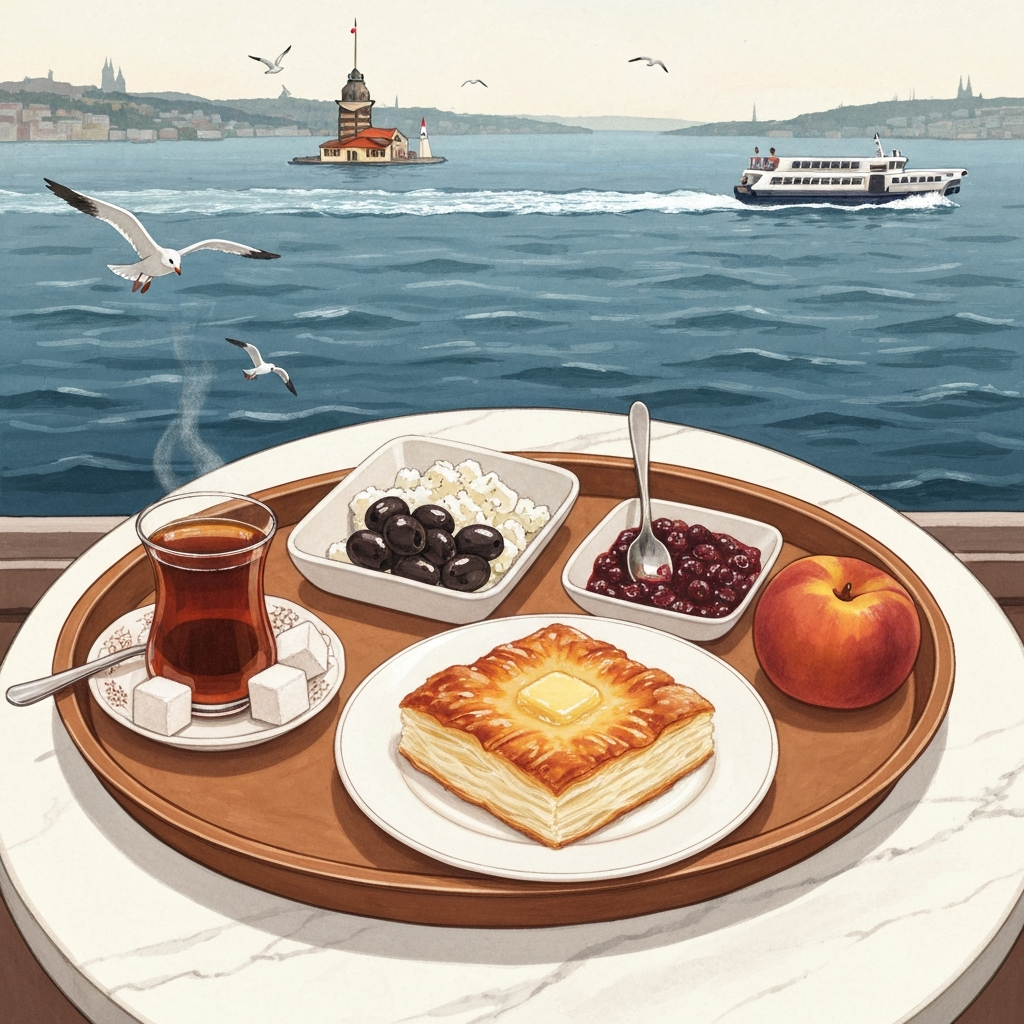
Hakimiyet-i Milliye Caddesi, the long street that runs inland from the iskele square, is the most densely-pastried road on the Asian side. Three institutions anchor it. Tarihi Üsküdar Börekçisi on Hakimiyet-i Milliye Caddesi is the morning su böreği address — the layered white-cheese pastry baked in big copper pans, sold by weight, eaten warm with a tulip glass of strong black tea (the What is su böreği? primer has the longer treatment of the water-bath technique and the lamination). Güllüoğlu (Üsküdar) a few doors along is the Asian-side branch of the Güllüoğlu baklava dynasty (a separate lineage from the Karaköy Güllüoğlu across the water; see the best-baklava post for the full story of the family split). For the Ottoman milk-pudding tradition, Saray Muhallebicisi (Üsküdar) on the same street is the reference — a dozen different milk-based desserts from the Topkapı- palace recipe books (aşure, sütlaç, keşkül, tavuk göğsü, the cinnamon-spiced kazandibi). For the village counterpart, Tarihi Beylerbeyi Börekçisi a kilometre north on Yalıboyu Caddesi in Beylerbeyi runs a smaller, quieter version of the same tradition next to a 19th- century Ottoman waterfront mosque.
3. Köfte on the Salacak waterfront
Filizler Köftecisi on Salacak Sahil Yolu is the Üsküdar köfte plate, served in a room where the Maiden's Tower sits on its own islet a hundred metres in front of your table. The plate is the same one you eat at Tarihi Sultanahmet Köftecisi across the water, or at the Beşiktaş Köftecisi a ferry away — hand-shaped grilled köfte, white-bean piyaz, pickled chillies, charred peppers, bread that arrives hot, a glass of cold ayran. But the room is the entire point: the picture-window view across the Bosphorus to the Sultanahmet skyline at sunset is one of the unambiguously beautiful tables in the city. For the bigger version of the same waterfront proposition, Salacak Balıkçısı two minutes along the coast at Salacak Sahil Yolu No. 36 is the fish-meyhane equivalent — same view, longer cold-meze table, the day's catch. Either choice is the right one for an early-evening Salacak meal. For everyday köfte in town, Köfteci Ramiz Üsküdar on Hakimiyet-i Milliye is the workday lunch room.
4. The waterfront tea gardens and Maiden's Tower
Üsküdar's defining late-afternoon ritual is the waterfront çay bahçesi — the open-air tea garden where you sit at a small painted table for two hours over endless tulip glasses of black tea and watch the strait. The reference is Çınaraltı Çay Bahçesi in Çengelköy on Çengelköy Caddesi, named for the four-hundred-year-old plane tree (çınar) that shades the entire garden, and arguably the most beautiful tea garden in the city. Kuzguncuk Sahil Çay Bahçesi on the Kuzguncuk seafront is the quieter neighbourhood version — locals reading the morning paper, two simit on the tray, the European shore directly across the water. For the panorama-from-above counterpart, Büyük Çamlıca Çay Bahçesi at the top of Büyük Çamlıca hill is the postcard view of all seven hills of the historic peninsula — best on a clear winter morning when the air is sharp and the city below is in crisp focus. And for the headline destination itself: Kız Kulesi Restaurant & Café is the small café-restaurant inside the Maiden's Tower on its tiny islet in the middle of the strait — reachable only by a short boat ride from the Salacak coast or from Beşiktaş, the table is the view, the food is correct rather than transcendent, and the setting is the reason you came.
5. The Bosphorus villages north of the iskele
The Asian-shore coast road runs north from the Üsküdar iskele through three Bosphorus villages in succession — Kuzguncuk, Beylerbeyi, and Çengelköy — and each one is its own afternoon. Kuzguncuk is the small, leafy, cobbled neighbourhood of brightly-painted timber houses that was historically home to Istanbul's Sephardic Jewish, Greek, and Armenian communities; the seafront tea garden and a row of small fish meyhanes on İcadiye Caddesi (Kanlıca Yelken Balık at No. 116 is the reference) is the evening pattern. Beylerbeyi, two villages further north, sits below the bridge that bears its name and centres on the 19th-century Beylerbeyi Palace; Beylerbeyi İskele Restaurant on the iskele square is the waterfront fish lokanta with a working dock view. Çengelköy, the third village, is the cucumber capital of Istanbul (the small thin sweet Çengelköy hıyarı is a regional micro-cultivar locals queue for in summer), with the Çınaraltı tea garden above and Çengelköy Balıkçısı on Çengelköy Caddesi for the seaside fish dinner. The villages link up by a single coastal road and a regular dolmuş minibus from the Üsküdar iskele; a half-day spent walking the shore between them is the most distinctive Asian-side afternoon in Istanbul.
How to plan a day around food in Üsküdar
Üsküdar runs across a long afternoon and early evening — start at the iskele, head inland for lunch, walk back to the waterfront for tea, then follow the coast north as the light turns. A working sequence, drawn from the Üsküdar Asian Heritage Trail in the app:
- 11 am. Cross the Bosphorus on the ferry from Beşiktaş or Eminönü. The 15-minute crossing, with a tulip glass of çay on board, is the soft start.
- 11:30 am. A warm su böreği at Tarihi Üsküdar Börekçisi on Hakimiyet-i Milliye Caddesi. Standing or at a small table inside; ten minutes, twenty lira.
- 1 pm. Lunch at Kanaat Lokantası on Selmanipak Caddesi. The counter, two zeytinyağlı dishes, one stew, a slice of the kazandibi for dessert.
- 3 pm. Walk down to the Salacak waterfront. Tea at one of the small cafés along the coast; the Maiden's Tower sits a hundred metres offshore and the Sultanahmet skyline is directly across the water. If you want the dessert pause, Saray Muhallebicisi (Üsküdar) on Hakimiyet-i Milliye is two minutes away for the Ottoman milk-pudding flight.
- 5 pm. Dolmuş or short taxi up the coast to Çengelköy. Tea at Çınaraltı Çay Bahçesi under the four-hundred-year-old plane tree. The European shore turns gold as the sun sets behind it.
- 8 pm. Dinner — three correct answers. Filizler Köftecisi on Salacak for the waterfront köfte plate with the Maiden's Tower view. Salacak Balıkçısı two minutes along the same coast for the bigger fish-meyhane version. Or Çengelköy Balıkçısı on the Çengelköy waterfront if you want to stay up the coast. Each is a different read on Üsküdar and all three are correct.
The full route — both the inland Hakimiyet-i Milliye walk and the coastal Salacak-to-Çengelköy stretch — is mapped in the Taste Istanbul app with walking directions, distances, and per-stop notes. Free, offline, no sign-in.
Other districts to combine with Üsküdar
Üsküdar is the gentler Asian-side anchor. A well-planned three-day food trip pairs it with:
- Kadıköy — fifteen minutes south along the Asian-side coast, the working market neighbourhood of the Asian side. Çiya Sofrası, the chaotic Kadıköy Çarşısı, the Kadife Sokak meyhanes, and the 1923 Baylan Pastanesi in Moda.
- Beşiktaş — a 15-minute ferry directly across the Bosphorus, the European-shore counterpart. Van-style kahvaltı in the Çarşı, the marketplace köfte institution, Bebek's café row, and the Çırağan Palace dining room.
- Eminönü — a 20-minute ferry across to the historic peninsula's commercial waterfront. The 1664 Spice Bazaar, the balık-ekmek boats at the iskele, the 1871 coffee roaster, and Pandeli's 1901 dining room.
- Sultanahmet — across the Bosphorus to the old city. Ottoman dawn breakfasts, the 1920 köfte institution on Divanyolu, and the Hagia-Sophia–Blue-Mosque axis.
The full guide is in the app.
Every venue named here, plus 15+ more across Üsküdar alone — and 230+ across the rest of the city — is mapped, addressed, and walked in the free Taste Istanbul app.
Download free on the App Store