Where to eat in Kadıköy
A walking food guide to Istanbul's Asian-side market neighbourhood — where to find the most important restaurant in the country, a working fish market that still smells like the Aegean at six in the morning, and the meyhane culture that built Beyoğlu's elsewhere. Hand-picked. No user reviews. No paid placements.
What Kadıköy is, and isn't
Kadıköy is a twenty-minute ferry ride across the Bosphorus from Eminönü, and it is the moment most Istanbul food trips begin to feel like the right one. The Asian side of the city has none of the monumental tourist density of Sultanahmet and none of the late-night nightlife pressure of Beyoğlu. What it has, in roughly half a square kilometre, is a working food market that has been here since the 1880s, the most historically important restaurant in modern Turkey, a row of meyhanes on a single cobbled lane that locals defend the way Parisians defend their bistros, and a thirty-year specialty-coffee culture that arrived two decades before it reached the European side.
What Kadıköy isn't is on most first Istanbul itineraries. It should be. The ferry from Eminönü or Karaköy is itself a meal — a glass of Bosphorus tea, a flock of seagulls trailing the boat for tossed simit crusts, the silhouette of the old city receding behind you. By the time you step off at the Kadıköy iskele, you are in a different Istanbul: less performed, more lived in, almost entirely Turkish in its rhythm.
This guide names them. Every venue below has been chosen for one of four reasons: a generational connection to the neighbourhood's food culture, technical excellence in a specific dish, a working market relationship that survives the tourist tide, or a role in the modern Anatolian kitchen now being built here. There are no paid placements. There are no user reviews to weigh.
🗺️ Want this as a walking tour?
The five-stop walking tour — Kadıköy Market Walk — runs from the iskele through the Kadıköy Balık Pazarı, into Çiya Sofrası, on to the meze table at Yanyalı Fehmi, and ends with profiteroles at the 1923 Baylan Pastanesi in Moda. Read the full stop-by-stop on the tour landing page, or download the free app for the offline-mapped version.
Download Taste Istanbul on the App StoreThe five things to eat in Kadıköy
1. The Çiya plate
There is a strong argument that Çiya Sofrası on Güneşlibahçe Sokak is the most culturally significant restaurant in Turkey. Chef Musa Dağdeviren has spent four decades locating, documenting, and restoring rare regional Anatolian dishes — sour-cherry kebabs from Gaziantep, walnut-stuffed lamb from Şanlıurfa, herb-marinated fish from the eastern Black Sea, vegetable preserves from villages most Istanbullular have never heard of. The kitchen rotates dozens of dishes a day on a counter-service line. You walk past, you point, you sit, you eat what you have probably never seen before. Featured on Netflix's Chef's Table, but the place was a quiet legend in Kadıköy long before the camera arrived. Order at least one cold olive-oil dish, one stew, and one rice. Don't skip the desserts. The grilled-meat sister-restaurant Çiya Kebap is two doors down and runs a parallel programme of rare Anatolian kebabs.
2. A morning in the Kadıköy market
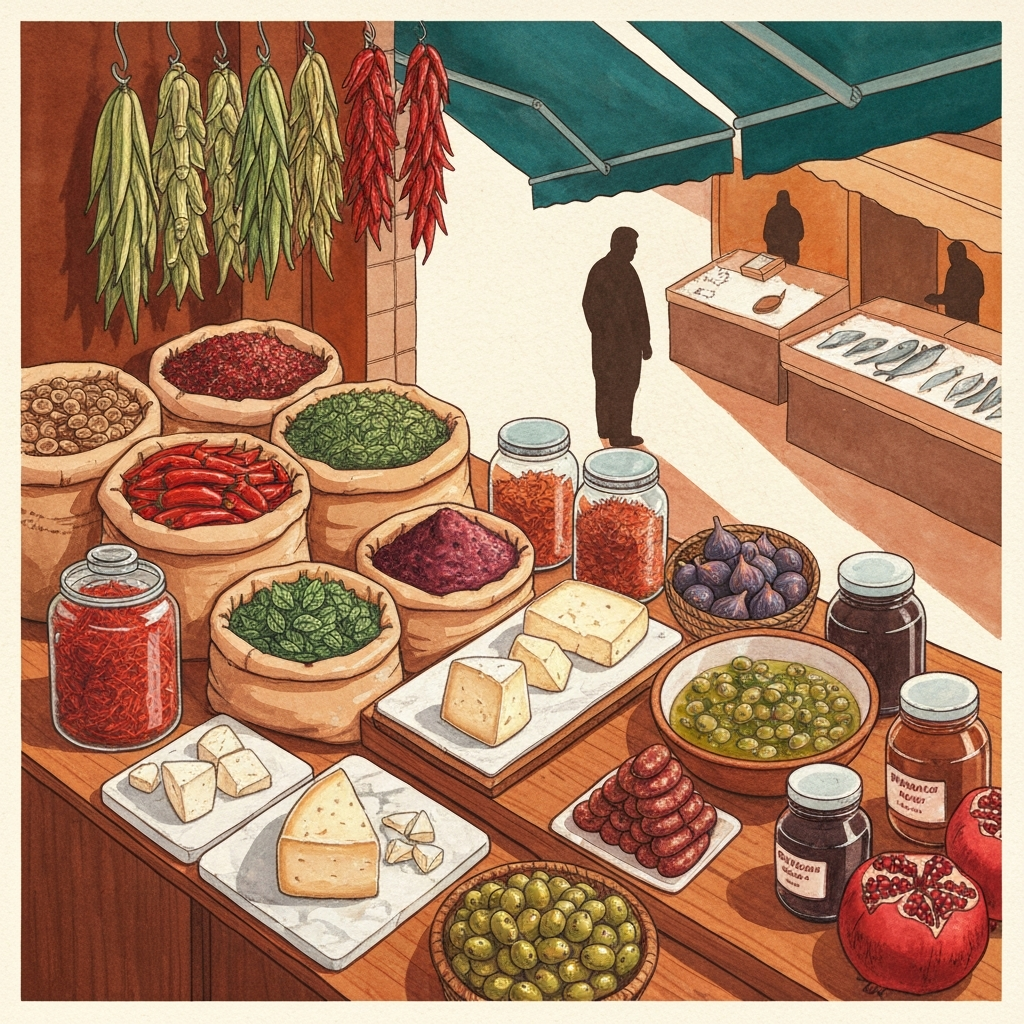
The Kadıköy Çarşısı — the produce market that wraps around Güneşlibahçe Sokak, Muvakkıthane Caddesi and the surrounding lanes — has been the Asian side's food infrastructure since the late 19th century. The Kadıköy Balık Pazarı (fish market) runs along its eastern edge: the day's catch on crushed ice, the fishmongers shouting prices, the smell of the sea before you've even seen the water. For pickles, walk five minutes to Petek Turşuları, a specialist that ferments cucumbers, green tomatoes, cabbage, cauliflower, and turnips in dozens of small barrels. For Anatolian charcuterie, the deli counter at Şarküteri Bülent is the reference. For the Aegean-island experience of cheese-and-olive tasting, the long marble bar at Baylan Pastanesi in Moda — open since 1923 — does not move.
3. Anatolian regional cooking, pide and ciğer
Kadıköy is the easiest neighbourhood in Istanbul to eat your way across the country in a single day. Bafra Pidecisi turns out Black-Sea-style boat-shaped pides from a wood-fired oven, blistered and proper. Just around the corner, Ciğerci Kazım Usta grills lamb liver over charcoal — the Edirne-style ciğer tradition, served with thinly sliced raw onion, parsley, sumac, and a glass of cold ayran. The bread oven at Borsam Taş Fırın a couple of streets away has been baking the same Antakya-style flatbreads since the late 20th century. Three kitchens, three regions, three streets.
4. The Kadife Sokak meyhanes
Kadıköy's meyhane row sits on Kadife Sokak (locally known as Barlar Sokağı, the bar street) and its tributaries. The meal is the same long, slow procession of cold mezes and rakı that defines Beyoğlu's Nevizade — but the room is louder and younger, the conversations are mostly Turkish, and the mezes lean Aegean. Kadı Nimet Balıkçılık on Serasker Caddesi is the fish-meyhane reference: a daily catch, a long cold table of palamut and lakerda and octopus salad, and a kitchen that knows what to do with whatever the boats bring in. Çıkmaz Meyhane on Mimar Çıkmazı is the smaller, design-forward modern meyhane the neighbourhood's chefs eat at on their nights off. Güneşin Sofrası two minutes from Çiya runs a strong cold-meze table at lunch.
5. Specialty coffee, before it reached Beyoğlu
Third-wave specialty coffee arrived in Istanbul on the Kadıköy side first, and the early roasters are still here. Coffee Department Kadıköy in Yeldeğirmeni was one of the city's first proper espresso bars and remains a roaster's roaster. Federal Coffee Company in Moda runs a brighter, brunchier room that does pour-overs and a serious filter list. Karabatak Kadıköy on Bahariye Caddesi is a sister of the Karaköy original and pours one of the better espressos on the Asian side. For a more historic pairing — coffee with Ottoman pastries — the sourdough oven at Komşu Fırın in Yeldeğirmeni is the place. None of these are quiet on a Saturday morning. The Coffee Department Kadıköy room is also Stop 5 of the Istanbul Specialty Coffee Crawl, the five-stop walking tour that begins on the Karaköy third-wave block and crosses the Bosphorus by ferry to finish here.
The Moda waterfront
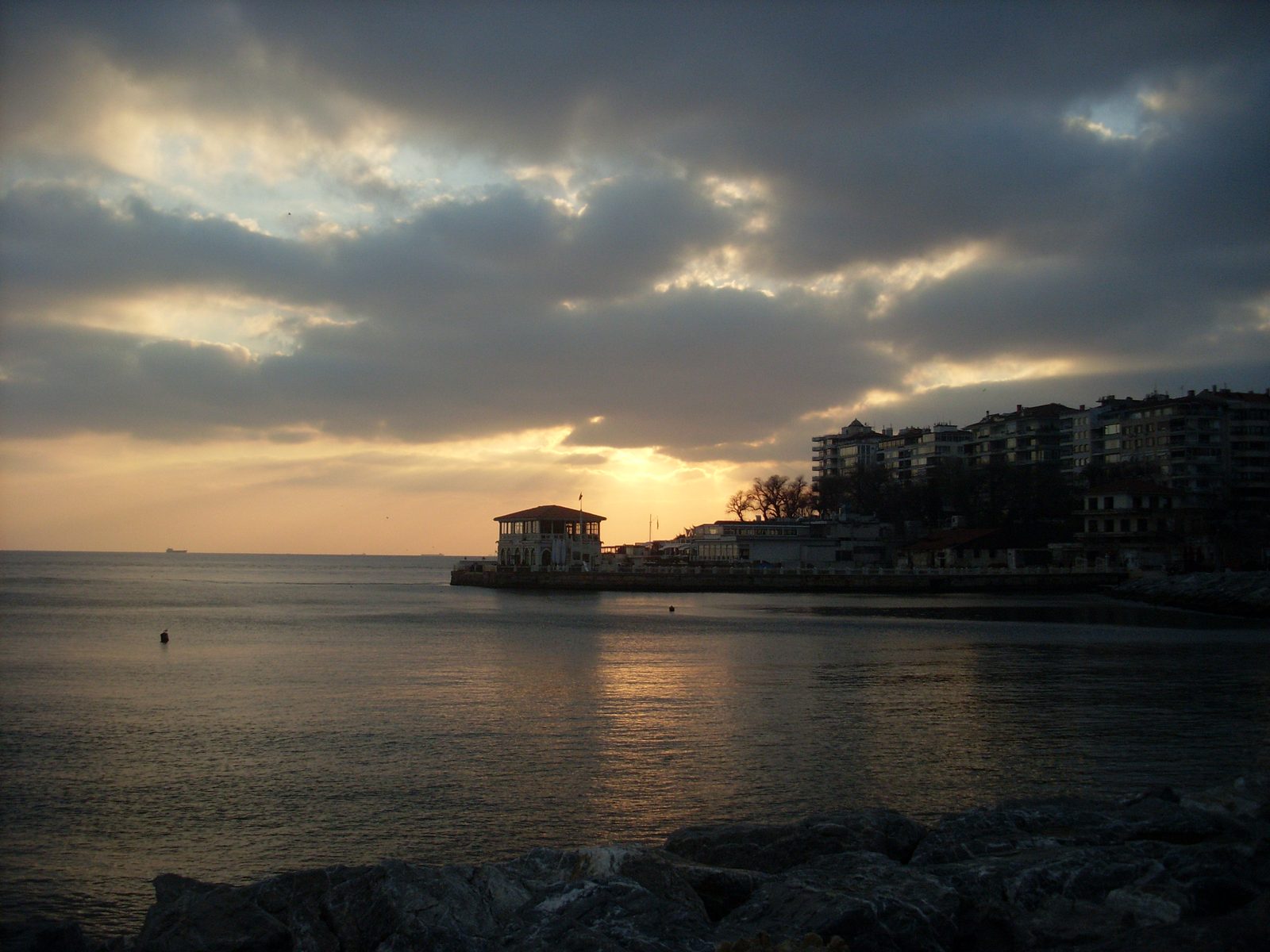
Walk fifteen minutes south from the iskele along the coast and you arrive in Moda, the Asian-side waterfront village that gives Kadıköy its softer second half. The fish-meyhanes on the seawall — Cibalikapı Balıkçısı Moda chief among them — pour sunset rakı with a view back across the Bosphorus to the old city. The breakfast house Moda Sahili Kahvaltıcısı serves a long Turkish breakfast at marble tables on the seafront. Koço Restaurant, a longtime Rum (Greek-Orthodox) institution, anchors the eastern edge of Moda Caddesi with a nineteenth-century dining room and a kitchen that has barely moved its menu in fifty years.
How to plan a day around food in Kadıköy
A working sequence, drawn from the Kadıköy Market tour in the app:
- 9 am. Take the ferry from Eminönü or Karaköy. Twenty minutes across the Bosphorus, the silhouette of the old city receding behind you. Tea on board, a simit crust to the seagulls.
- 9:45 am. Walk into the Kadıköy Çarşısı and the Kadıköy Balık Pazarı. Spend forty-five minutes browsing the produce, the fish, the cheese, the pickles. Buy something small for the hotel later.
- 11 am. Petek Turşuları for a small glass of pickled-juice as a digestif.
- 12:30 pm. Lunch at Çiya Sofrası — the counter, a cold dish, a stew, a rice, a dessert. Take your time. This is the centre of the day.
- 3 pm. Coffee at Federal Coffee Company in Moda — a fifteen-minute walk south through Moda's residential streets, the Sea of Marmara opening on your right.
- 5 pm. A bowl of Anatolian-pistachio ice cream and a classic profiterol at Baylan Pastanesi on the corner.
- 8 pm. Dinner on Kadife Sokak — Kadı Nimet Balıkçılık for a proper fish-meyhane evening, or Çıkmaz Meyhane for the modern-meze counterpart. End with the last ferry back across at midnight.
The full route is mapped in the Taste Istanbul app with walking directions, distances and per-stop notes — free, offline, no sign-in.
Other districts to combine with Kadıköy
Kadıköy is the Asian-side anchor. A well-planned three-day food trip pairs it with:
- Üsküdar — the second Asian-side district, ten minutes north along the coast. The traditional, conservative counterpart: Kanaat Lokantası since 1933, the börek-and-muhallebi street, the Maiden's Tower waterfront, and the Bosphorus villages of Kuzguncuk, Beylerbeyi and Çengelköy.
- Beyoğlu — across the Bosphorus on the European side, the bohemian half of central Istanbul. Late-night kokoreç, profiterol since 1944, and the meyhane culture of Nevizade.
- Sultanahmet — the historic peninsula, where the Istanbul food story starts. Ottoman dawn breakfasts and the 1920 köfte institution on Divanyolu.
- Beşiktaş — a 25-minute ferry across the Bosphorus to the European-shore counterpart: the Çarşı fish market, Van-style kahvaltı, and the Çırağan Palace dining room.
The full guide is in the app.
Every venue named here, plus 25+ more across Kadıköy alone — and 230+ across the rest of the city — is mapped, addressed, and walked in the free Taste Istanbul app.
Download free on the App Store