Home › Walking food tours › Balat & Fener Walk
Balat & Fener Walk
Five stops, three hours, 2.5 km through the painted-timber streets of the Golden Horn's oldest multicultural quarter — a stone-oven bakery, a café in a restored Ottoman house, a pastane that bakes the Sephardic pastries of Balat's Jewish heritage, and two of the city's most atmospheric historic meyhanes, closing by the Greek Orthodox Patriarchate as the light goes over the water. The most layered neighbourhood in Istanbul, eaten one room at a time.
Difficulty: Moderate (the Balat slopes are steep and
cobbled) · Best started: 10:30 am · Tour ID:
balat-fener
What this tour is for
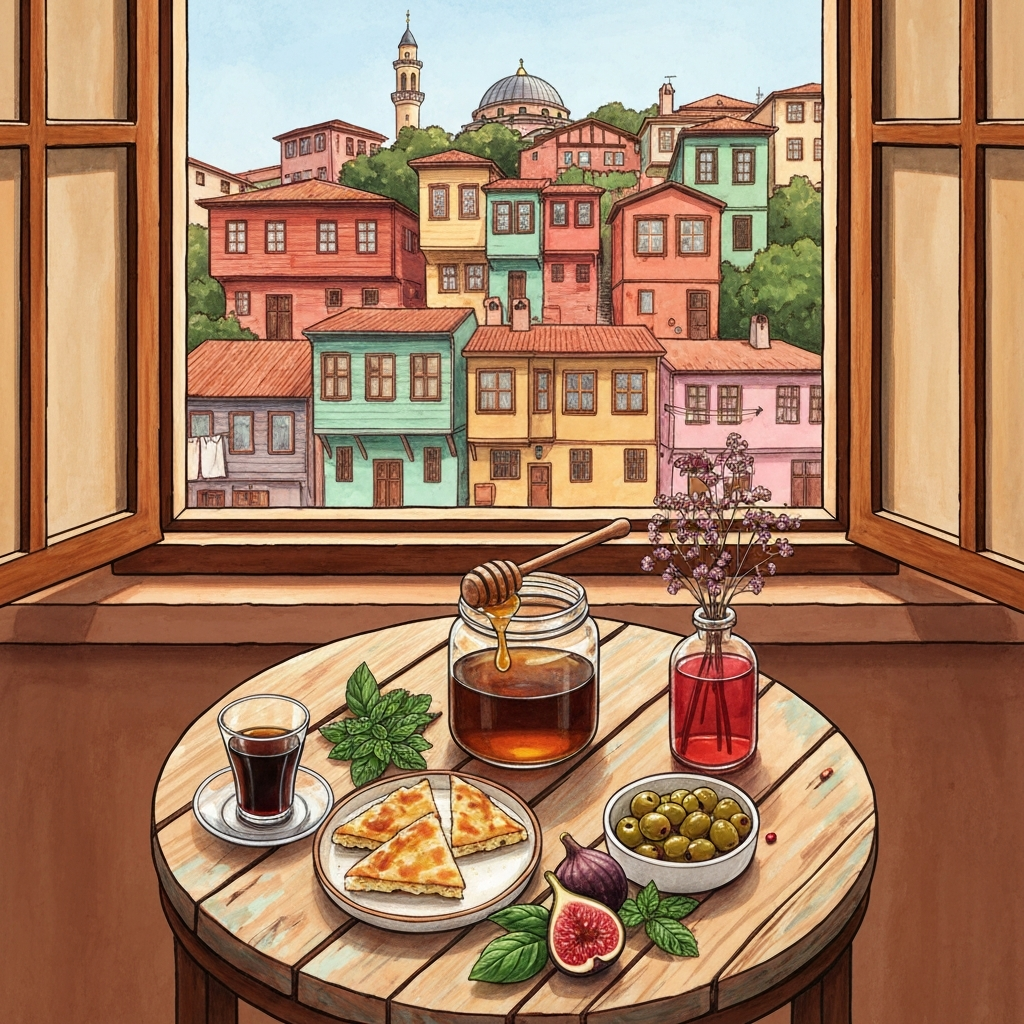
Balat and Fener are the twin Golden-Horn neighbourhoods where, for centuries, Greek (Rum), Armenian, Jewish and Turkish communities lived side by side — Fener the historic seat of the Greek Orthodox Patriarchate, Balat the old Jewish quarter, both threaded with churches, synagogues and mosques within a few streets of each other. That layered history is still legible in the food: a bakery firing bread in a stone oven the way it has for generations, a pastane keeping Sephardic recipes alive, meyhanes where the cold-meze tradition was shaped by all four communities at once. In the last decade Balat's steep, vividly painted timber streets have also become the most photographed quarter in the city, which means the trick here is to eat past the photo-backdrop cafés to the rooms that were always here. This walk does that — and it earns its Moderate rating honestly: the Balat slopes are steep and the cobbles are uneven, so wear real shoes.
Best for: travellers who like history layered into their food; anyone who has done the European-side classics and wants the Golden Horn; meyhane lovers after the oldest, least-polished rooms; walkers who don't mind a hill. Moderate walking — a 2.5-km route with two real climbs up and down the Balat slope. Pairs naturally with the Balat district guide for the full neighbourhood context, and with the Best fish meyhanes in Istanbul blog post for the longer story of the Istanbul meyhane the last two stops belong to.
The route
Stop 1 — Balat Fırını · 10:30 am
Address. Balat Mahallesi, Balat. A few minutes uphill from the Balat ferry stop and the Golden Horn shore road.
Begin with bread. Balat Fırını is the neighbourhood's old working bakery, firing pide, simit and börek from a wood-fed stone oven through the morning, and the smell of wood smoke is the right way to start a walk through Balat. Buy a warm poğaça (the soft cheese-filled roll) to eat on the move and a loaf of the sour ekşi maya bread to carry, and step back out into the painted streets. This is a stop you eat standing — the point is the oven and the walk ahead, not a sit-down.
Order: a warm poğaça to walk with; a wedge of cheese börek straight from the oven. Ten minutes.
Stop 2 — Balat Kahvesi · 11:00 am
Walk. 4 minutes (300 m) over to Vodina Caddesi, one of Balat's main painted-house streets.
The second stop is coffee in an old house. Balat Kahvesi occupies a restored Ottoman-era timber house on Vodina Caddesi — original wooden shutters in Balat's signature vivid colours, a shaded courtyard, walls of old neighbourhood photographs and painted tiles. The specialty Turkish coffee is properly made (ground fine, cooked slow in the cezve, served with the grounds settling), and the extended breakfast spread is one of the better ones in the quarter if you arrive hungry. But the reason to stop is the room itself: it is the clearest surviving picture of what a comfortable Balat house looked like a century ago. Sit in the courtyard for half an hour.
Order: a Turkish coffee (orta, medium sweet) and, if you skipped breakfast, a plate of the cheese, olives and honey-and-kaymak. Thirty minutes.
Stop 3 — Şimdi Pastanesi · 11:45 am
Walk. 3 minutes (220 m) down toward the Balat Çarşısı (market) streets.
The third stop honours Balat's Sephardic Jewish heritage through baking. Şimdi Pastanesi keeps alive the pastries the Sephardic community brought to Balat after 1492 and baked here for centuries: the boyoz (a flaky, coiled olive-oil pastry, the signature Sephardic-Izmir bake), the tahinli çörek (a sesame-tahini swirl bread), and savoury gözleme. The boyoz in particular is a dish you will struggle to find anywhere else in Istanbul outside this tradition — a direct, edible link to one of the communities that built the neighbourhood. Eat one warm with a glass of tea and ask which bakes are coming out next.
Order: a boyoz warm from the tray, a glass of çay, a piece of the tahinli çörek to carry. Twenty minutes.
Stop 4 — Agora Meyhanesi · 1:00 pm
Walk. 6 minutes (450 m) across the neighbourhood toward the Hisaraltı edge of Balat.
The fourth stop is one of the most historically significant meyhanes in the city. Agora Meyhanesi is a Balat institution from the era when the Rum, Armenian, Jewish and Turkish families of the quarter ate together at long shared tables, and the room still works that way: a long cold-meze spread — tarama (whipped fish roe), white cheese, salt-cured mackerel (çiroz / lakerda), pickled vegetables (turşu) — followed by hot mezes and the house rakı poured over ice. This is not a fast lunch; it is the long Balat midday sit, and the right way to do it is to order a spread of cold mezes to share, a small carafe of rakı, and let the afternoon stretch. The walls and the regulars are part of the meal.
Order: a cold-meze selection to share (tarama, lakerda, white cheese, turşu), one hot meze, a small carafe of rakı with cold water and ice. An hour.
Stop 5 — Fener Meyhanesi · 3:00 pm
Walk. 10 minutes (700 m) north along the Golden Horn shore from Balat into Fener, toward the waterfront below the Greek Orthodox Patriarchate.
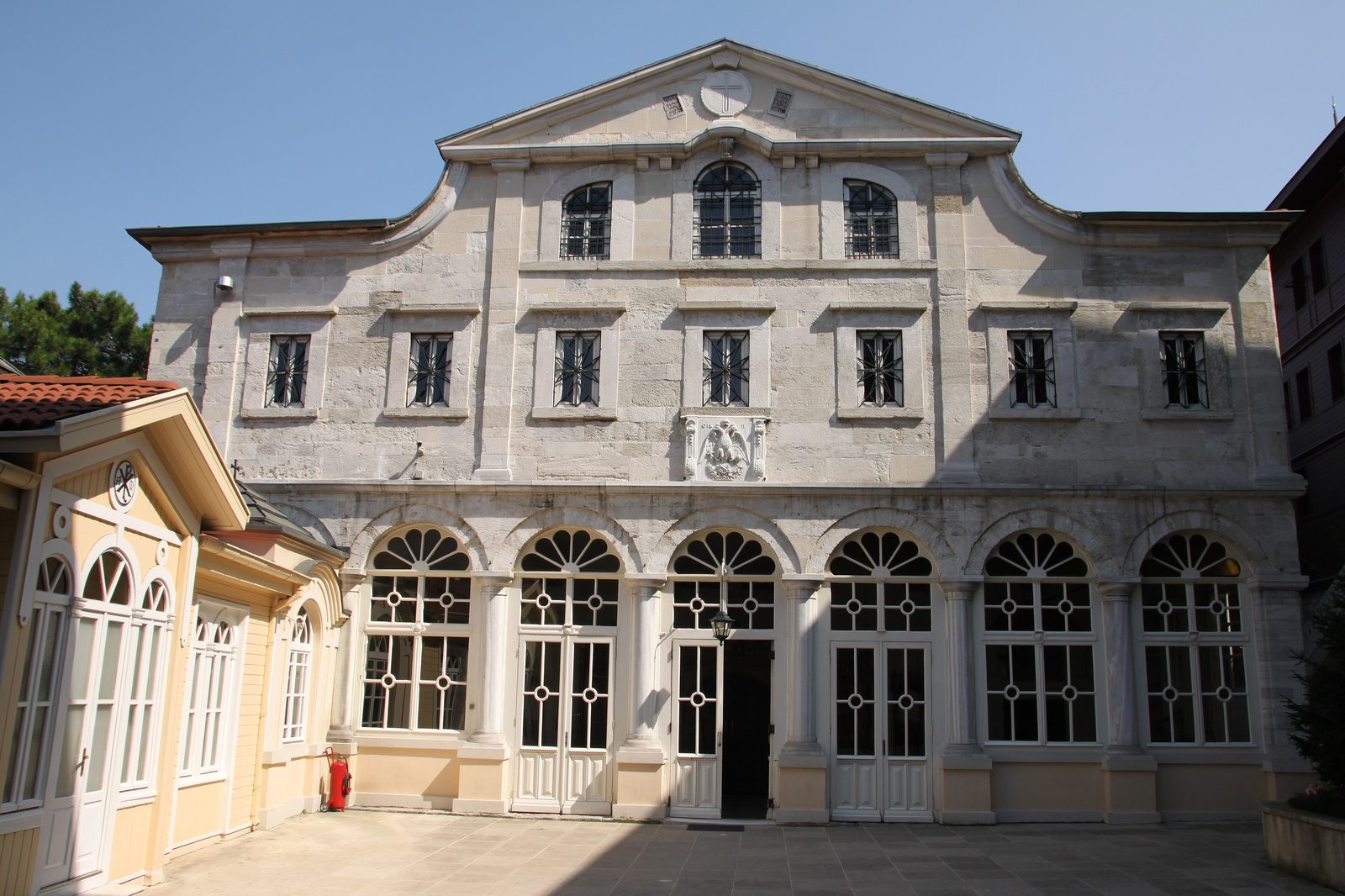
Close on the Fener waterfront. Fener Meyhanesi sits near the Greek Orthodox Patriarchate (the Fener Rum Patrikhanesi, pictured above) and keeps a Rum-accented kitchen: Greek-Istanbul cold mezes and fresh fish, eaten with the Golden Horn in front of you and the Byzantine land walls visible across the water. The dishes to order are the ones that carry the Rum inheritance — saganaki (pan-fried cheese flamed at the table), an octopus salad dressed in olive oil and capers, and the day's grilled fish — with a final rakı. Time the stop for the late afternoon: as the sun drops, the light comes off the Golden Horn and the old city across the water turns gold. It is the quiet, historic, end-of-the-day counterpoint to the Bosphorus-shore meyhane evenings — the same rakı-and-meze tradition, in the city's oldest multicultural quarter.
Order: saganaki, octopus salad, a grilled fish of the day to share, a carafe of rakı. Timed for the hour before sunset. An hour and a half.
What to bring
- Real walking shoes. This is the only Moderate-rated walk in the catalogue for a reason: the Balat slopes are steep and the cobbles are worn and uneven. Leave the smooth-soled shoes at the hotel.
- Cash for the bakery and pastane. Balat Fırını and Şimdi Pastanesi run cash; Balat Kahvesi and the two meyhanes take cards. Small bills help.
- A respectful eye at the Patriarchate. Fener is a living religious centre, not only a backdrop; if you step into the Patriarchate grounds near the final stop, dress and behave as you would at any working place of worship.
- An afternoon, not a rush. The Agora and Fener meyhane sits are the heart of the walk; the whole point of Balat is the long, slow afternoon. Don't schedule anything after it.
- The Taste Istanbul app, downloaded before you start. Walking directions between the stops are mapped, work offline, and don't need a SIM — useful here, because the Balat backstreets turn and climb in ways that confuse most map apps.
Practical notes
- Best day. Tuesday through Saturday. Balat is at its quietest and most local on weekday mornings; weekends bring the Istanbul photo crowd to the painted streets, which is fine but busier. Sunday adds the brunch-café crush.
- Best season. April–June and September–October give the most comfortable weather for the slope walking and the waterfront finish. Summer midday on the Balat hills is hot and shadeless; start at 9:30 am in July and August.
- Reservations. Agora Meyhanesi and Fener Meyhanesi are worth a weekend booking, especially for the Fener sunset seating. The bakery, café and pastane take none.
- Avoid. Major Islamic holidays (Eid al-Fitr / Ramazan Bayramı and Eid al-Adha / Kurban Bayramı), when several family-run rooms close for two to three days.
Pair this tour with
- Where to eat in Balat — the long-form district guide for the full Golden-Horn context: the painted-timber streets, the bakery row, the restored-Ottoman artisan cafés, and the historic meyhanes.
- Best fish meyhanes in Istanbul — the blog post on the three Istanbul fish cultures, of which the Balat-Fener multicultural meyhane is the oldest and most layered strand.
- Best Turkish breakfast in Istanbul — whose Balat Sunday-brunch-wave section maps the same painted streets this walk climbs.
- Walking food tours of Istanbul: which one's right for you — the meta-guide to all 16 tours, sorted by intent.
Walking directions, offline.
The full Balat & Fener Walk — the slope route through the painted streets and the Golden Horn waterfront finish — is mapped in the Taste Istanbul app. Downloaded once and run offline thereafter. Free, no sign-in.
Download Taste Istanbul on the App Store