Home › Blog › Best fish and seafood meyhanes in Istanbul
Best fish and seafood meyhanes in Istanbul: the long evening, the fast street meal, the palace dining room
Istanbul is the only city of its size in the world that sits on a saltwater strait connecting two seas — the Sea of Marmara to the south, the Black Sea to the north — and every fish in the city's repertoire passes through that strait twice a year. The result is a fish culture older than the Ottoman empire and structured into three distinct rooms: the long Bosphorus-shore meyhane evening with cold mezes and rakı, the standing street meal of balık ekmek and midye dolma at Eminönü, and the white-tablecloth Ottoman-Greek dining rooms above the Spice Bazaar. This is the editor's guide to each — the rooms that do them best, the season for the lüfer bluefish run, and the order to eat a Turkish fish meal in.
What this guide is (and isn't)
This is the editor's piece on Istanbul fish — the rooms we send friends to, named, with an explanation of why each one earns the slot it gets. Every venue is in the free Taste Istanbul app, mapped, addressed, and walked offline. There are no paid placements anywhere in this guide. There are no user-review aggregates. There are no rankings disguised as objective truth — the city has hundreds of fish rooms and any list as short as this one is one editor's opinion stated transparently. What is true: we have eaten in each of the rooms named below in the last eighteen months; we cross-check every fact against the canonical neighbourhood guides on this site; and we name only venues that exist in the app's curated dataset.
A note on what this post does not cover. Istanbul has other fish rooms outside the ten neighbourhoods we write about in depth — the Kumkapı historic-Armenian meyhane row inside the old city walls, the Sarıyer fish market at the northern Bosphorus mouth, the Adalar islands' summer fish-lokanta tradition — and each is worth its own piece. For this post we have stayed inside the ten neighbourhoods covered by our district guides so that every named venue has a long-form neighbourhood context to read after.
1. The long Bosphorus-shore meyhane evening
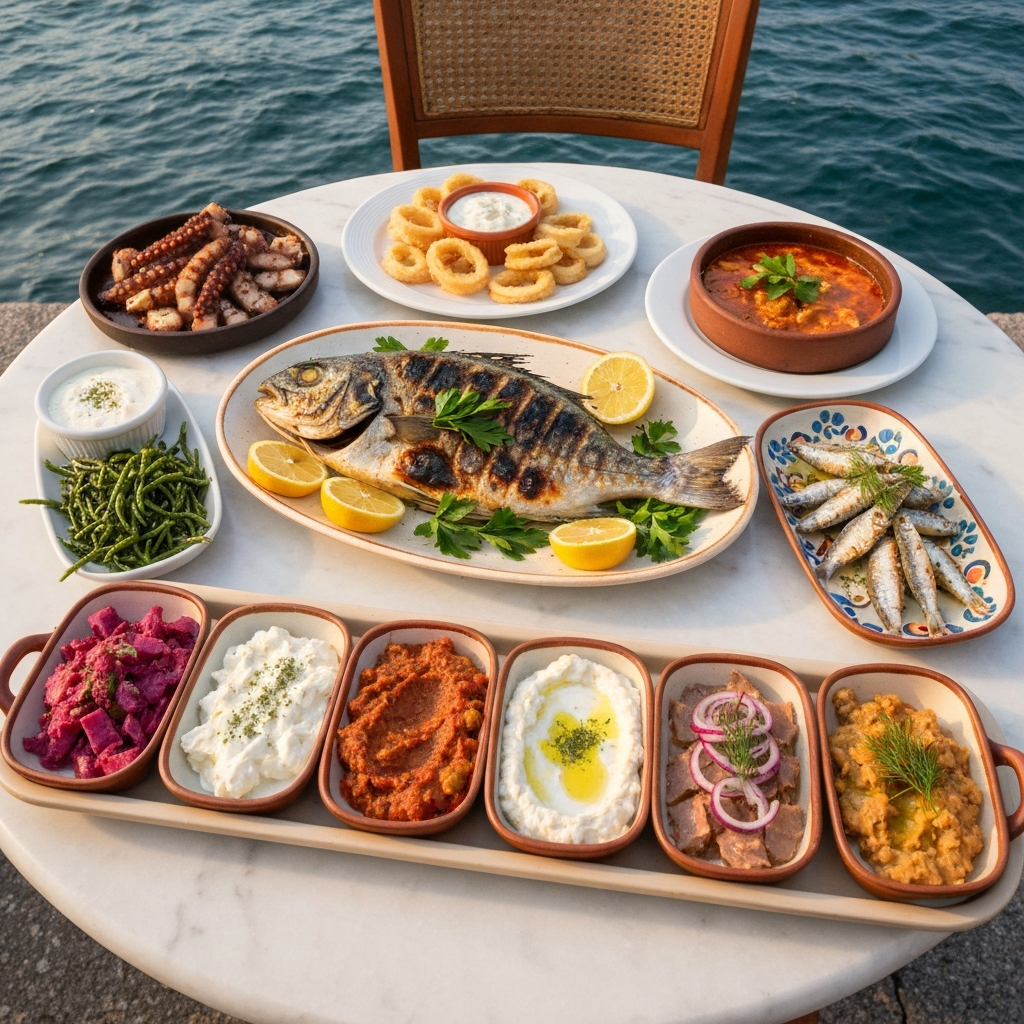
The defining Istanbul fish meal is the four-hour Bosphorus-shore meyhane evening — the slow procession of cold mezes, the small carafe of rakı diluted with water over ice (the Turks call the cloudy diluted glass aslan sütü, lion's milk), the warm starters after the first hour, the whole grilled fish for two, and a long coffee or sour-cherry pudding to close. The European Bosphorus shore from Beşiktaş Çarşı up to Arnavutköy is the single densest stretch of working fish meyhanes in the city.
The Beşiktaş Çarşı fish-market row
Liman Balık Lokantası on Çelebioğlu Sokak is the fishmonger's-lunch room of the Beşiktaş fish market — paper-white tablecloths, fluorescent lighting, a zinc bar at the front, fish on the open grill at the back, the day's catch on crushed ice in the window. The room serves whatever was unloaded that morning: charcoal-grilled levrek (sea bass), olive-oil-dressed deniz börülcesi (samphire), fried hamsi in season, grilled octopus dressed with lemon and oregano. Walk-in, cash-friendly, cheap by Istanbul fish standards. The right opening to a long evening.
Çilingir Sofrası Balık on Süleyman Seba Caddesi is the Çarşı's full-service fish meyhane — a long dining room with a marble bar at the front, a wine list that is better than the room's modesty suggests, and a meze trolley wheeled tableside so you can pick what catches your eye: smoked bonito (çiroz), samphire in olive oil, lakerda (cold-cured bonito), stuffed mussels, fava bean purée, fried artichoke hearts the kitchen has been serving since the 1990s. The classic Turkish meyhane order in its classic Turkish meyhane setting. Both Liman and Çilingir Sofrası sit inside the Beşiktaş Bosphorus Evening walking tour and are written up in long form in the Beşiktaş district guide.
The Arnavutköy waterfront
Three kilometres north along the European shore, the wooden-fronted Bosphorus village of Arnavutköy is the seafood half of the long evening. Adem Baba Balık on Satış Meydanı Sokak is the family-run institution every Istanbullular has a memory of: a single set seafood menu (there is no menu negotiation, no choice to make), a rapid procession of small plates that fill the paper-covered table — fried calamari rings with the house tartar sauce that the kitchen is legendary for, a clay pot of shrimp casserole bubbling in tomato and butter, grilled bluefish in season, a small bowl of Russian salad, bread and crisp pickles. Book the seven o'clock seating if you can; the queue forms by eight.
Set Balık Restaurant on the Arnavutköy quay is the waterfront-table counterpart, set so close to the strait that ferry wakes lap against the terrace railings. The kitchen specialises in whole-grilled lüfer (Bosphorus bluefish) during the September–February run, a lightly-salted çupra (gilthead bream) year-round, a sea bass carpaccio dressed with citrus and dill, and a long warm taramasalata served on toasted flatbread. The terrace at sunset is among the half-dozen most beautiful tables on the European Bosphorus shore.
For the full five-stop European-Bosphorus evening that runs from the Beşiktaş Çarşı fish market through Arnavutköy and ends under the chandeliers at Tuğra in the Çırağan Palace, see the Beşiktaş Bosphorus Evening tour landing page.
2. The fast standing fish meal at Eminönü
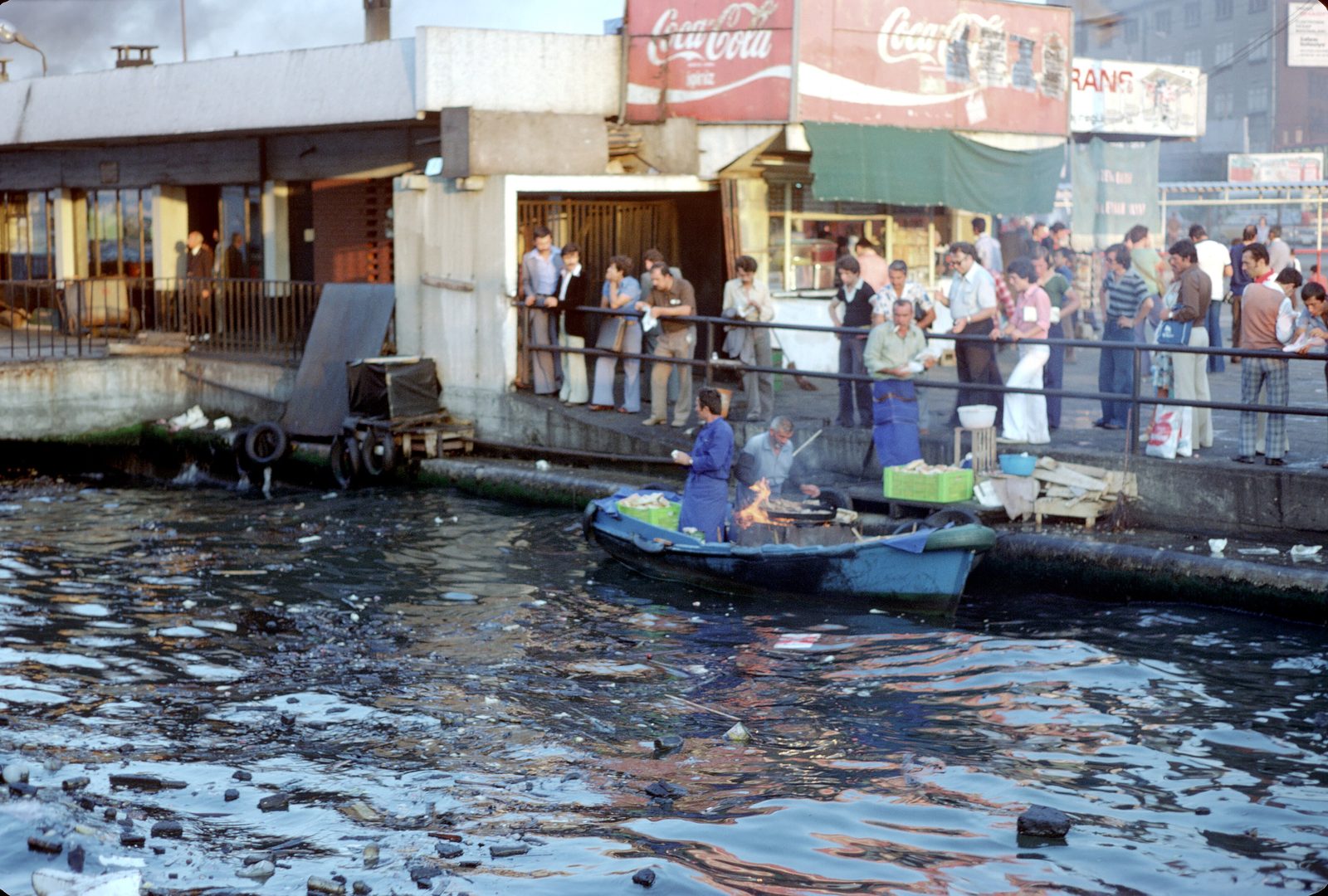
The other half of the Istanbul fish repertoire is the opposite of the long meyhane evening: a standing two-bite meal eaten on the waterfront in fifteen minutes for the price of a coffee.
The Tarihi Eminönü Balık Ekmek Tekneleri — four ornately decorated wooden boats moored at the Eminönü iskele on the Golden Horn, rocking gently in the wake of passing ferries, with their grills running open-flame from morning to early evening — are the source. Mackerel (uskumru) is filleted, grilled over charcoal, slid into a half-baguette with onion rings, shredded lettuce and a hard squeeze of lemon, and handed to you in paper. Eat standing, facing the water, with the bread tilted away from you and the juice running down the paper. The whole transaction costs less than a coffee. There is no sit-down version and you do not want one.
Cross the tram lines to the square in front of the Yeni Cami and find Midyeci Ahmet — the city's reference midye dolma (stuffed-mussel) counter. A dozen mussels stuffed with spiced rice, currants and pine nuts; each shell prised open by the attendant, lemon squeezed over the top, eaten on the spot. Stand-and-eat. Salt, spice, citrus and rice — the city's other great fast fish ritual.
Both of these stops are inside the Eminönü Fish & Spice Trail along with the 1664 Spice Bazaar, the 1871 Kurukahveci Mehmet Efendi coffee roaster, and lunch at Pandeli. Read more in the Eminönü district guide.
3. The Ottoman-Greek-Istanbullu dining room
The third Istanbul fish room — distinct from both the long meyhane evening and the standing street meal — is the white-tablecloth, tiled-interior, cold-meze-trolley-on-wheels dining room founded by one of the city's historic Greek (Rum) or Armenian restaurateur families in the late-Ottoman or early-republican period and still running on the same recipes. Two rooms in particular hold the tradition.
Pandeli Restaurant on the first floor of the Mısır Çarşısı has been in continuous operation in its turquoise-tiled, domed-ceiling dining room since 1901 — the room itself is among the city's three most handsome restaurant interiors. The kitchen runs a classical Ottoman-Greek-Istanbullu programme: the cold meze trolley arrives at the table on wheels so you can select from a dozen small dishes (the sliced lakerda, the imam bayıldı, the smoked-aubergine patlıcan salatası, the green-walnut tarator); the warm starters include a fried-aubergine-and-yoghurt plate that is the kitchen's signature; mains run to whole-grilled levrek with tarator sauce, the slow- cooked lamb güveç, and the buttered prawn casserole. The sour-cherry pudding is the dessert order. Book a day ahead at peak.
Tarihi Balıkçı Sabahattin on Seyit Hasan Kuyu Sokak in Cankurtaran — the cobbled streets south of Sultanahmet, between Topkapı and the Sea of Marmara — is the historic-peninsula seafood counterpart. The courtyard fills with white-clothed tables under a Wisteria-covered pergola in summer; the indoor dining room runs through winter with the same menu. The kitchen does the long Turkish fish meal in its full version: the cold meze trolley with eight to ten small dishes; a second round of warm starters (the karides güveç shrimp casserole, the fried-calamari-with-tartar plate); a whole grilled bream or sea bass for two; the sour-cherry-and-tahini pudding to close. The rakı service is unhurried and the bill is fair for what arrives at the table.
The third room in this tradition, Karaköy Balıkçısı on the Karaköy waterfront, runs a slightly more modern interpretation of the same template — a long cold-meze table, a careful rakı list, and a grilled-fish list that runs whatever was unloaded that morning at the Karaköy fish-market quay. Pair this room with the Karaköy Meze Trail tour and the Karaköy district guide.
4. The Ortaköy waterfront strip
The third European-shore fish district — distinct from the Beşiktaş Çarşı row to the south and the Arnavutköy waterfront to the north — sits directly on the small waterfront square of Ortaköy under the 1973 Bosphorus Bridge. Three rooms hold the strip.
Ortaköy Balıkçısı on the seafront immediately east of the Mecidiye Camii mosque square is the long-standing reference fish-lokanta on the Ortaköy waterfront — a small dining room with terrace tables facing the Bosphorus Bridge, a daily fish list dictated by the morning catch, and the classic Turkish whole-grilled-fish-and- cold-meze procession. Kıyı Balık Ortaköy next door runs the slightly more casual counterpart with the same waterfront view and a quicker turnover. Çinaraltı Aile Çay Bahçesi & Balık at the foot of the Bosphorus Bridge is the family-tea-garden version — sit under the plane tree, order a fried-calamari plate and a small fish, a half-carafe of rakı, and let the afternoon turn into evening. All three are walked in the Ortaköy district guide.
5. The Çırağan Palace finish
The fifth Istanbul fish room is the imperial palace fine-dining version — the closing dinner for a special occasion, with the kitchen drawing on the Ottoman archive recipe books and the dining room set inside one of the nineteenth-century sultans' palaces. There is really only one of these.
Tuğra on the first floor of the Çırağan Palace Kempinski occupies one of the original frescoed reception halls of the last Ottoman imperial palace, completed in 1871. Beneath frescoed ceilings and crystal chandeliers, the kitchen runs an Ottoman-cuisine programme drawn from the imperial-archive recipe books — slow-cooked lamb with quince and saffron, the palace's signature saffron-pilaf with pistachios, a rotating seasonal sherbet (cardamom-and-rose in winter, sour-cherry in summer) served between courses, and the fish course that varies by season. The summer terrace faces directly onto the floodlit Bosphorus; the Asian-shore lights of Çengelköy and Beylerbeyi flicker across the strait. Book a week ahead; dress for the room. It is the closing stop on the Beşiktaş Bosphorus Evening walking tour.
What's in season, and when
Istanbul fish runs on a strict calendar dictated by the twice-yearly Bosphorus migration. The short version:
- Lüfer (Bosphorus bluefish). September through February. The defining Istanbul fish; the city's autumn-and-winter food story. Best at Set Balık, Adem Baba and the small fishmonger's-lunch rooms of the Beşiktaş Çarşı. Look for the çinekop (the smaller pre-spawn size), the sarıkanat (the medium-sized juvenile) and the kofana (the largest run-of-season fish) on the daily list as the autumn deepens.
- Hamsi (Black Sea anchovies). November through February. Fried in cornmeal, served whole, eaten with the fingers. The cheapest serious fish meal in the city; available at every meyhane and most of the Eminönü-Sirkeci kebab houses for two months a year.
- Çupra (gilthead bream) and levrek (sea bass). Year-round. The reliable backbone of the daily list when the seasonal fish are not running. Whole grilled with olive oil and lemon at every room above.
- Palamut and torik (bonito). September through November. Served fresh on the grill, or cured into lakerda (the cold-cured bonito on every meze trolley year-round).
How to order the long Turkish fish meal
A first-time visitor to a Turkish fish meyhane often makes one of two mistakes: ordering the main fish course first (it should be last), or ordering a single round of mezes (you want two rounds, in two waves). The correct sequence:
- First round — four to five cold mezes from the trolley, picked at the table when the trolley arrives. Lakerda, samphire in olive oil, smoked-aubergine patlıcan salatası, haydari (garlic-yoghurt), and çiroz (smoked bonito) is a solid opening five. A small carafe of rakı (200 ml is the right size for two), with water and ice on the side. Dilute the rakı yourself — roughly one part rakı to one to two parts water — and watch the clear spirit turn cloudy white as the anise oils precipitate. This is the aslan sütü, lion's milk.
- Second round — one or two warm starters, ordered as the cold-meze plates are cleared. Fried calamari with the house tartar sauce; the clay pot of shrimp casserole bubbling in tomato and butter (karides güveç); a small plate of fried hamsi in season. Top up the rakı carafe if it is empty.
- Third round — the whole fish for two, grilled. Order it from the ice display by pointing at the specific fish you want; ask the price by the kilo before the fish goes on the grill (the fish is sold by weight, and a 700-gram bream is the right size for two). Eat with olive oil and lemon; do not over-season — the fish should be the star.
- Closing — sour-cherry pudding, Turkish coffee, perhaps a small tea glass. Almost every classical meyhane and fish room runs a vişne dondurması or vişne pudingi on the dessert list; it is the right palate-cleansing close to a long evening of rakı and fish.
The short version
If you have time in Istanbul for exactly two fish meals — one fast, one long — the answer is unambiguous.
The fast meal: a balık ekmek standing at the Tarihi Eminönü Balık Ekmek Tekneleri on the Golden Horn waterfront, followed by a dozen midye dolma on the Eminönü Meydanı square at Midyeci Ahmet. Total cost: roughly the price of a coffee. Total time: under an hour. This is the meal you eat the morning you arrive in Istanbul.
The long meal: the four-stop European-Bosphorus fish-meyhane spine of the Beşiktaş Bosphorus Evening tour — Liman Balık in the Çarşı fish market → Çilingir Sofrası Balık for the cold-meze trolley → Adem Baba Balık in Arnavutköy for the fish ritual → and, if the night is special, Tuğra at the Çırağan Palace for the closing Ottoman-cuisine course. This is the meal you eat the last night before you fly home.
If you have time for a third: Pandeli for a long late-morning Saturday lunch above the Spice Bazaar — the meze trolley, the fried-aubergine plate, the whole grilled bream, the sour-cherry pudding, two hours under the turquoise tiles. It is the room that has been doing the Ottoman-Greek- Istanbullu fish meal continuously since 1901, and the room that is closest to what the city's fish culture actually was a hundred years ago.
The walking version: the Bosphorus Seafood Trail is the single-afternoon spine that walks the three cultures above end to end — the balık ekmek boats at the Eminönü iskele (Stop 1), the Galata Bridge meyhanes (Stop 2), a Karaköy neighbourhood balıkçı two streets from the fish market (Stop 3), then a Bosphorus ferry up the European shore to Arnavutköy for Adem Baba and a closing whole-fish grill at Set Balık on the waterfront quay. Four hours, 3.5 km of walking plus a 25-minute ferry leg. The fish-only day, end to end.
Every room on this page is in the app.
Every venue named above — plus 230+ more across the rest of the city — is mapped, addressed and walked offline in the free Taste Istanbul app. No tracking pixels. No third-party analytics. Free, no sign-in.
Download Taste Istanbul on the App Store