What is köfte? An Istanbul primer
Köfte is the hand-shaped, charcoal-grilled meatball that is the most everyday dish on the Turkish table — a short, flat, finger-length patty of minced lamb or beef, cooked fast over coals, served with a bean salad, pickled chillies and a glass of ayran. It is also, like most Turkish food, a regional argument: half a dozen cities each claim a slightly different version. The Istanbul köfte that everybody knows is the Sultanahmet style. Here is what it is, how it differs from a Western meatball, and the four canonical Istanbul rooms that do it best.
The short answer
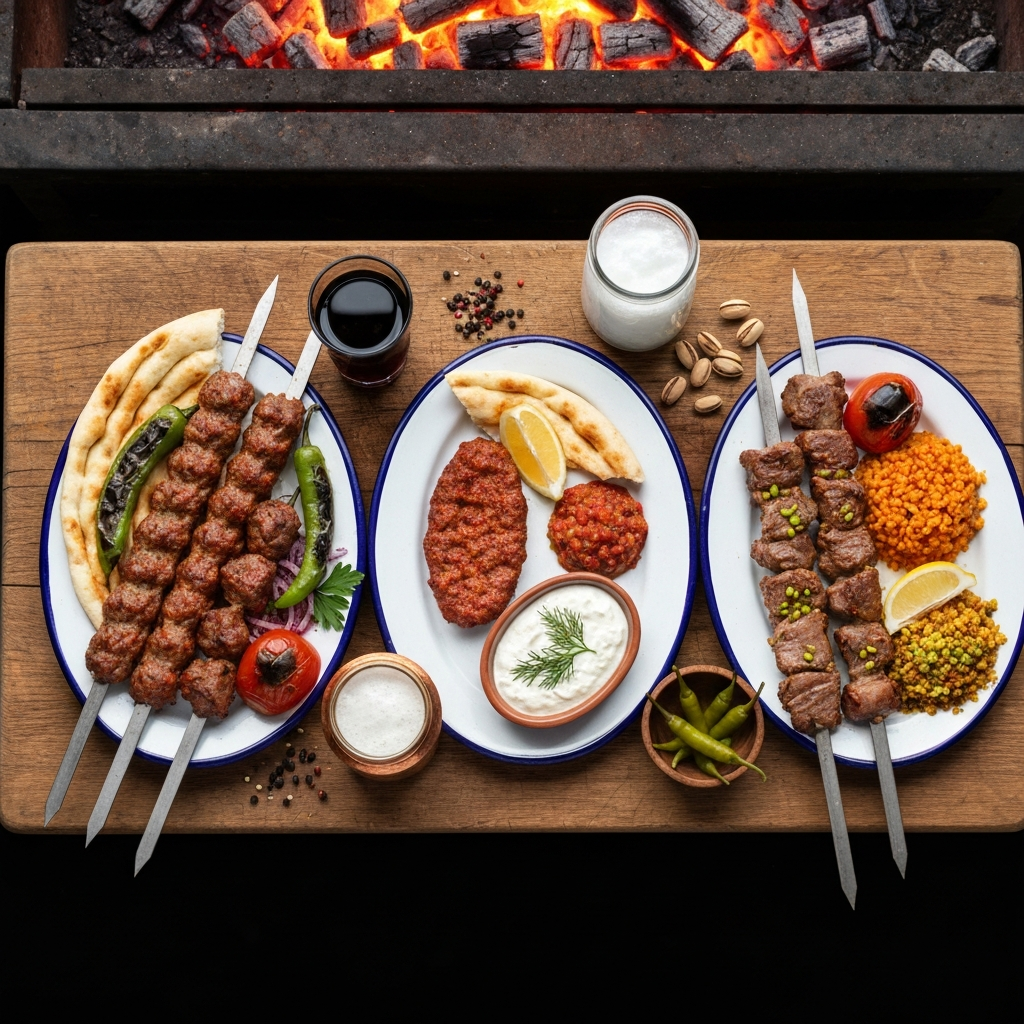
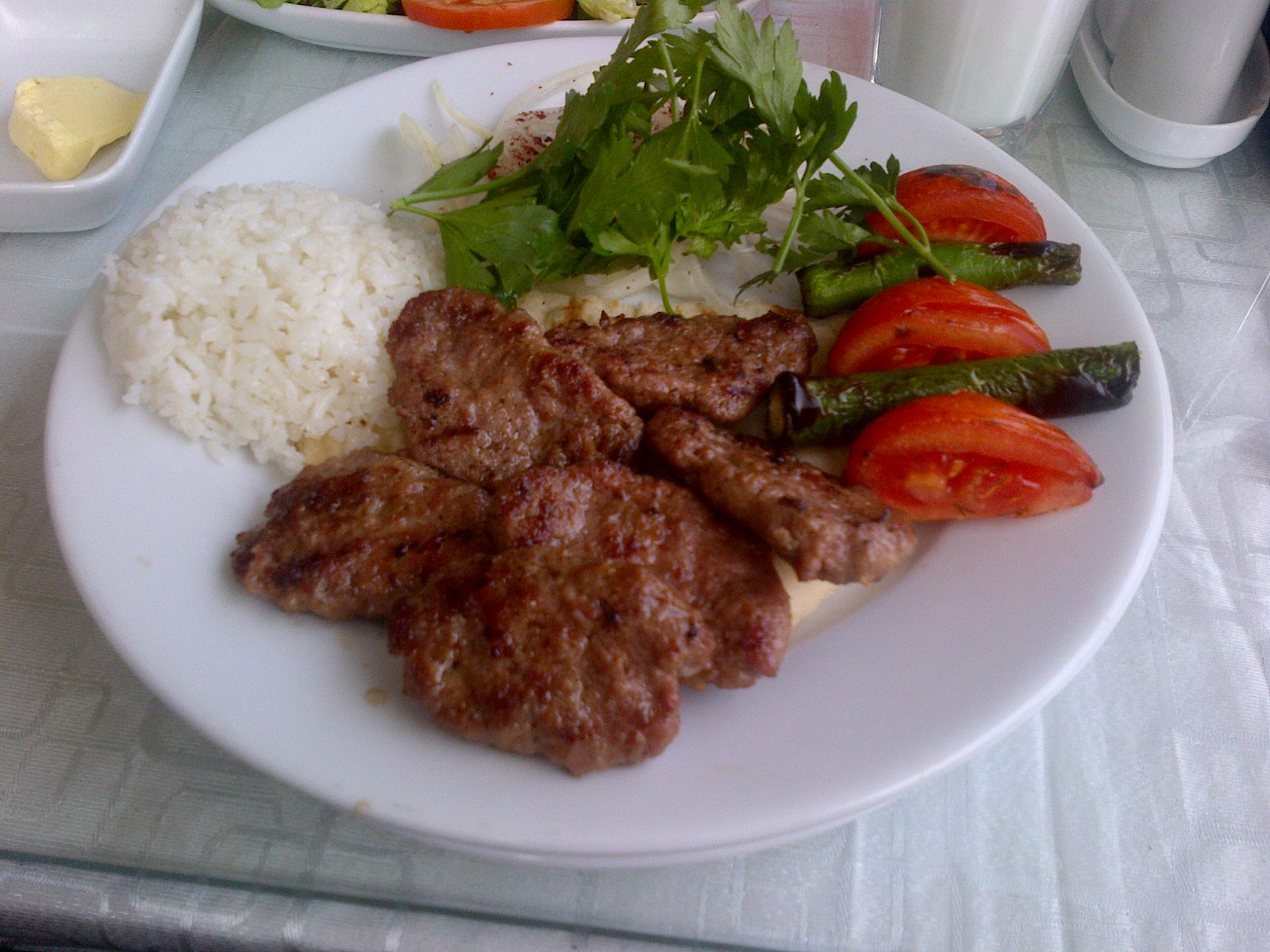
Köfte (pronounced KER-feh, with a soft Turkish ö) is the Turkish word for a hand-shaped piece of seasoned ground meat, cooked by grilling, frying or stewing. In Istanbul almost every köfte you'll meet is the grilled version — minced lamb or beef worked by hand with onion, parsley, bread soaked in milk, and salt, formed into short finger-length patties, and cooked over charcoal until the outside chars and the inside stays pink. It arrives on a plate with three things, always: a piyaz (white-bean salad in olive oil and sumac), a handful of pickled long green chillies (turşu), and bread that's still warm. The drink is cold ayran.
That's the dish. The complications all sit downstream of it.
How is köfte different from a Western meatball?
Three things matter. First, the shape: a Western meatball is round and balls up in a sauce; a köfte is short, flat, finger-length and built for the grill. The Turkish hand shapes it by rolling the seasoned mince into a small cylinder, then patting it flat between palms — the flat shape lets the charcoal heat reach through the meat in a couple of minutes per side, and builds the seared crust that defines the dish.
Second, the cooking method: Western meatballs are usually simmered in a sauce after a quick sear, or baked. Istanbul köfte is fast charcoal grilling — direct heat, no sauce, no oven. The kitchen at a proper köfteci runs a long charcoal grill parallel to the counter, and one or two grill cooks turn rows of köfte over flames all day. The smoke is the seasoning.
Third, the binder: the Turkish recipe uses bread soaked in milk (içli ekmek) rather than eggs and breadcrumbs. The wet bread keeps the interior soft against the high charcoal heat — the same technique used by the cooks of the Italian polpetta and a number of other Mediterranean traditions. Some recipes add cumin; the Sultanahmet version uses no cumin, only salt and grated onion. Less is the house style.
The lamb-or-beef question
Traditionally köfte is lamb. The fat content of lamb mince keeps the patty juicy against the charcoal heat, and the gaminess builds the savoury layer the grill smoke catches. Many Istanbul köfteci rooms use a blend now — typically 70/30 lamb-to-beef — to soften the flavour for daily lunch eating and to keep the cost down. A pure-beef köfte exists, mostly outside Istanbul; the Sultanahmet reference uses the blend.
A few rooms work the other way: Köfteci Arnavut in Balat — the Albanian-tradition köfteci that opened on Mürselpaşa Caddesi at the Golden-Horn edge of the district — runs a higher beef ratio with a sharper black-pepper hit, which is the Albanian inflection on the Anatolian dish. The Balat district guide has the longer Köfteci Arnavut story.
The regional spread
Every Anatolian region has a köfte. The ones an Istanbul visitor will see most often, and the difference between them:
Sultanahmet köftesi
The Istanbul standard. Short, flat, finger-length, fast over charcoal, served with piyaz, pickled chillies and bread. The reference is Tarihi Sultanahmet Köftecisi on Divanyolu Caddesi No. 12, which has been grilling the same plate since 1920. There is no menu to read; you sit down, the waiter brings the standard plate, you eat. Imitators with confusingly-similar names line the same street — the original is the one with the long queue and the hundred-year-old room, see the Sultanahmet district guide for the navigation.
Adana köfte (or Adana kebab)
The southern Mediterranean version. Hand-chopped (not minced) lamb with red Maraş pepper, formed long around a flat metal skewer rather than into a finger patty, and grilled. The chilli heat is the marker — a properly hot Adana sets a low burn at the back of the tongue. Strictly speaking the Adana is a kebab, not a köfte, because of the skewer; but the two words overlap loosely and a Sultanahmet menu will sometimes call it Adana köfte. The longer story is in the best-kebab-in-Istanbul blog post.
İnegöl köfte
Named after the small town of İnegöl in Bursa province, south of Istanbul. Made with a blend of lamb and beef and a high proportion of grated onion, formed into a plump oval rather than a flat finger, and grilled. The onion makes the interior sweeter than the Sultanahmet version. Less common in Istanbul restaurants but worth ordering if it's on the menu — many Istanbul köfteci rooms run an İnegöl alongside the Sultanahmet one.
Tekirdağ köfte
The Thracian version, from Tekirdağ on the European side of the Marmara Sea. Pure beef, no breadcrumb binder, a high content of grated onion juice (the solids removed), cooked over charcoal. Looks similar to the Sultanahmet plate but tastes leaner and more onion-forward. The Thracian region produces a lot of beef, which is why the local recipe drops the lamb.
Akçaabat köftesi
The Black Sea version, from Akçaabat west of Trabzon. Loose-textured, very heavily seasoned with cumin and black pepper, fried in butter rather than grilled. The only one of the regional köftes that isn't a grilled dish — and the only one with cumin in the seasoning. A small handful of Istanbul rooms run an Akçaabat version on the menu but it's a destination dish; for the real thing, you travel.
Çiğ köfte
The outlier. Literally "raw köfte" — a Şanlıurfa speciality of hand-pounded raw lamb mince worked with bulgur, red Maraş pepper and twenty-plus spices into a paste, formed into small cylinders, and eaten cold wrapped in lettuce. The traditional raw version has been largely legislated out of restaurant menus in Turkey since 2009, and most rooms now serve a vegetarian bulgur-only version. The few Istanbul kitchens still making the original include the Gaziantep dynasty Develi at its Etiler flagship — see the Istanbul Kebab Trail walking tour for that stop.
Where to eat the Istanbul köfte
Four canonical rooms, across three districts:
- Tarihi Sultanahmet Köftecisi — Divanyolu Caddesi No. 12, Sultanahmet. The 1920 reference. The plate is köfte, piyaz, pickled chillies, bread, ayran; no menu, no substitutions. Expect a queue at the noon-to-2-pm lunch peak. This room is also Stop 3 of the Sultanahmet at Dawn walking tour and Stop 2 of the Istanbul Kebab Trail.
- Tarihi Beşiktaş Köftecisi — Çarşı Caddesi No. 24, Beşiktaş. The Çarşı-market köfteci, running for decades on the same corner of the Beşiktaş Çarşı. Looser room than the Sultanahmet reference, the plate just as good, no tourist mark- up. See the Beşiktaş district guide.
- Köfteci Arnavut — Mürselpaşa Caddesi No. 139, Balat. The Albanian-tradition version, beef-heavy and black-pepper-forward, at the Golden-Horn edge of Balat. A working neighbourhood room rather than a destination — half the regulars are local. See the Balat district guide.
- Tarihi Balat Köftecisi — Leblebiciler Sokak No. 3, Balat. The street-food version inside the Balat market lanes. Smaller patties, faster turnover, eaten standing at the counter with a glass of ayran.
What to order with it
The Sultanahmet plate is its own complete order: one plate of köfte, piyaz, pickled chillies, bread, a glass of cold ayran. No substitutions and nothing extra. If you want a starter, ask for the çoban salatası (chopped tomato, cucumber, raw onion, parsley, olive oil and lemon) — but the dish is designed to stand on its own. Dessert at the köfteci is almost always a small bowl of kazandibi or sütlaç; the longer story on Turkish milk puddings is in the best-Turkish-desserts blog post.
How to tell a great köfte from a mediocre one
Three tells, in order of importance. First, the colour: a properly grilled köfte is dark mahogany on the outside, with visible char marks where the patty sat on the grill bars, and the inside is just barely pink. Grey through means the grill wasn't hot enough; charred black through means it sat too long. Second, the texture: the bite should have a slight resistance from the seared crust, then the interior should yield softly — neither rubbery nor mushy. Third, the juice: a fresh-off-the-grill köfte runs a thin amber juice onto the plate when you press it with a fork. A köfte that's been sitting under a heat lamp doesn't.
The piyaz is the second tell. A serious köfteci dresses the white beans in good olive oil, lemon and sumac, with diced raw onion and parsley folded in fresh; a mediocre one uses vinegar and a tired oil. The bread is the third. A real köfteci bakes its own bread or buys it warm from the bakery next door; the standard is a flat oval loaf with a crisp crust and a soft interior, served with the steam still rising.
What's next
If you want to put köfte inside a wider walking day through the historic peninsula, the Sultanahmet at Dawn morning tour uses Tarihi Sultanahmet Köftecisi as its mid-day stop and is the right entry point. For the region-by-region tour of Turkish charcoal grilling — Şanlıurfa kebab, cağ kebabı, Adana, Gaziantep, and köfte together — the Istanbul Kebab Trail walks five of the canonical rooms in a single afternoon. For the wider kebab spectrum the dish sits inside, the best-kebab-in-Istanbul blog post is the longer-form companion to this primer.
Every köfte room above is in the app.
The four canonical Istanbul köfteci rooms — and 230+ other hand-picked venues across the city — are mapped, addressed and walked offline in the free Taste Istanbul app. No tracking pixels, no third- party analytics. Free, no sign-in.
Download Taste Istanbul on the App Store