Home › Blog › What is cağ kebabı?
What is cağ kebabı, and why is the skewer horizontal?
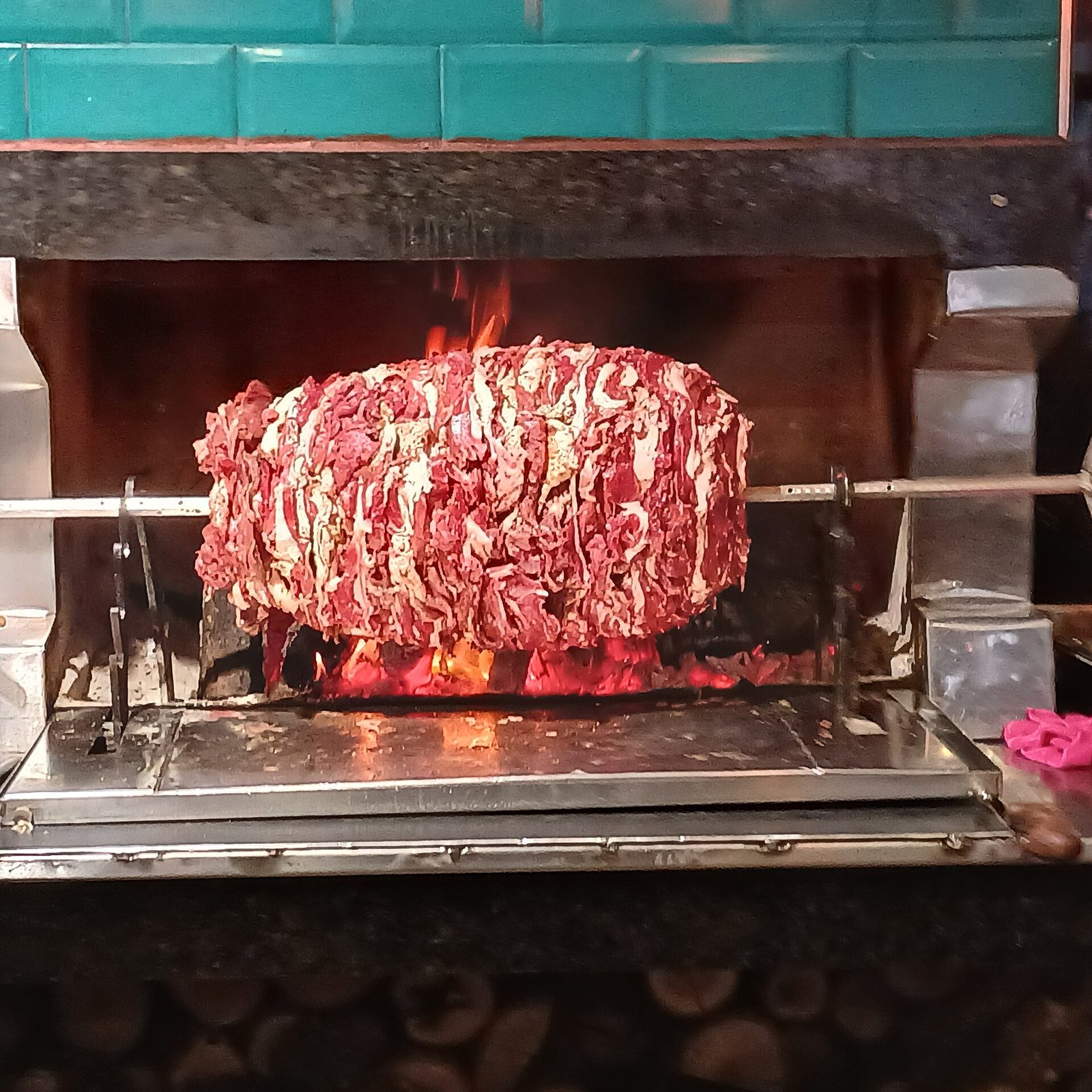
Cağ kebabı (pronounced JAH ke-bah-BUH) is the Erzurum- tradition lamb kebab cooked on a horizontal wood-fire skewer — the older Anatolian ancestor of the vertical-spit döner that has gone international. Lamb is marinated overnight, stacked in long layers around a horizontal iron rod, set beside (not above) a wood fire, and carved in thick ribbons straight onto a plate from a short hand-held second skewer. It is the most distinctly regional thing a kebab tourist can eat in Istanbul, and the dish whose ancestry most overturns the common idea of what döner is.
The short answer
Cağ kebabı is a horizontal-skewer lamb kebab from the eastern Anatolian city of Erzurum. The technique is the distinguishing feature. Boneless lamb shoulder and leg are marinated overnight in a mix of grated onion, salt, pepper and a little olive oil, stacked in long flat layers around a meter-long iron rod, and set horizontally beside an open wood fire — close to the flames but not above them. The cook turns the rod by hand every few minutes for an hour or two. As the outermost layer cooks through, a second short skewer is used to shave thick ribbons of lamb directly onto the diner's lavash. The next layer cooks next.
The plate that arrives is a flat bread, a pile of fresh-shaved lamb, raw white onion dusted in sumac, a sprig of parsley, a long pickled green pepper, and a small dish of tomato. Drink a glass of cold ayran. Order another skewer when this one's gone.
The horizontal-vs-vertical question — the döner reveal
Most international diners know döner as the vertical-spit street kebab that anchors a million sandwich shops across Europe and a growing number across North America. The vertical-spit version is the modern one — invented in Bursa in the late 1860s by a cook named İskender Efendi, popularised in Istanbul in the 1880s, and exported globally in the second half of the twentieth century when Turkish migration to West Germany seeded the döner-sandwich chain.
Cağ kebabı is the older one. The horizontal-spit Erzurum technique is documented in Anatolian cooking long before the vertical-spit was invented; the dish has been cooked in eastern Turkey for centuries before the Bursa-and-Istanbul reinvention turned the rod ninety degrees. The technical reason for the reinvention was grease-management: a vertical spit lets the rendered fat drip down the rotating meat and continually self-baste the lower layers, which raised the daily yield from a single cooking session significantly. The horizontal cağ version stays slower, smaller, more hand-fed.
The shape difference reads on the plate. Vertical-spit döner is shaved into thin near-uniform slices that accumulate in a counter tray and end up packed into a sandwich; cağ kebabı arrives in irregular thick ribbons of meat cut to order from a single short skewer, never held over, never accumulated. A vertical-spit room serves you in 30 seconds; a cağ room serves you in 20 minutes. The pacing is the point.
The Erzurum origin
Erzurum is a high city — 1,900 meters above sea level on the eastern Anatolian plateau — and the long winters and the local pastoralist tradition shaped a cuisine built around slow-cooked lamb and bread. The horizontal-spit cağ technique is well-suited to the geography: a relatively small cooking surface yields a steady supply of cooked meat through the long winter dinner hours, and the wood-smoke flavour catches the high-altitude lamb in a way the vertical-spit modern version misses entirely. Most Anatolian cooking writers credit Erzurum's Şenkaya district specifically as the dish's origin village.
The dish is a hard one to translate westwards. Almost every village in Erzurum and the surrounding provinces has a cağ specialist; almost no village in any other region does. In Istanbul, where the eastern Anatolian diaspora is small, cağ kebabı specialists number in the handful rather than the dozens — which is why a single Sirkeci room dominates the dish in the capital.
How to eat it
The order is one short skewer per person to start. You don't get a knife and fork; the lamb is shaved straight from the rotating main skewer onto a piece of warm lavaş — the soft flat unleavened bread that is the eastern Anatolian everyday bread — on a metal plate in front of you. To eat: pull a piece of lavaş off the stack on the table, lay a few strips of the just-shaved lamb across it, top with a small handful of the raw white onion dusted in sumac, a slice of tomato, a sprig of parsley, and a bite of the pickled long green pepper. Roll it shut like a small cigar. Eat with your hands.
The drink is cold ayran — the slightly salty yoghurt drink that cuts the lamb fat — or a glass of Erzurum-style strong black tea. Wine and beer don't appear in a traditional cağ room. After the first skewer the waiter will ask, silently, by raising one eyebrow. Order a second. The cağ room is built on repeated short skewers rather than single large portions.
Where to eat cağ kebabı in Istanbul
The Istanbul reference room is one room. Şehzade Cağ Kebabı at Hüdavendigâr Caddesi No. 3 in Sirkeci — five minutes' walk from the Sirkeci tram stop and the historic Orient Express station — is the most respected cağ practitioner in the city. The menu is effectively one dish: the skewer arrives every fifteen minutes from a hand-turned horizontal rod set behind a long wood-fire counter, and the order is one or two skewers per person with the standard lavaş-and- onion accompaniments. The room is small, plain, fluorescent-lit, and the queue at the lunch peak (12:30–2 pm) is the longest in the Sirkeci block. The walls hang Erzurum mountain photographs; the regulars are split half-and-half between Sirkeci office workers and Erzurum diaspora who eat the dish at home anyway and come for the technique.
Şehzade is Stop 3 of the Istanbul Kebab Trail and Stop 4 of the Sultanahmet at Dawn morning tour — both walks use the same Sirkeci room inside different narrative arcs (a regional-kebab survey versus a historic-peninsula breakfast-and-lunch sequence). A handful of other Istanbul rooms run a cağ on the menu alongside the standard kebab spectrum, but no other Istanbul kitchen is built around the horizontal-skewer technique the way Şehzade is.
What to order with it
The full plate is short: one or two cağ skewers, a stack of warm lavaş bread, a salad of raw onion with sumac and parsley, sliced tomato, a long pickled green pepper, and a glass of cold ayran. That's the meal. If you want a starter, ask for the çoban salatası (chopped tomato, cucumber, onion, parsley, olive oil and lemon) — but the cağ room is deliberately single-dish, and ordering anything else blurs the focus. Dessert at Şehzade is typically the house kazandibi — caramelised milk pudding — served in a small dish; the longer story on Turkish milk puddings is in the best-Turkish-desserts blog post.
How to tell a great cağ from a mediocre one
Three tells. First, the fire: a real cağ uses a wood fire (oak or beech is the local Erzurum preference), not a gas flame. The smoke is the seasoning. A gas-fired cağ cooks the meat correctly but misses the wood note entirely; you can usually see the heat source from the counter.
Second, the shave: a great cağ is carved to order in thick ribbons that come off the rotating main skewer onto a short hand-held secondary skewer in a single motion. The ribbons should be irregular — bands of cooked outer crust alternating with just-barely-pink interior, the fat caramelised on the edges. Pre-shaved meat sitting under a heat lamp is the failure mode; it goes grey and dry within minutes.
Third, the lavaş: the bread should be warm, soft, freshly stretched and griddled or oven- fired the morning of service. A great cağ room bakes its own bread, or buys it warm from the bakery next door, every morning. A mediocre cağ room serves bagged sliced bread that's been sitting in a basket since breakfast.
What's next
If you want to put cağ kebabı inside a wider survey of Turkish charcoal grilling, the Istanbul Kebab Trail walks Şehzade as Stop 3 in a five-stop afternoon that sequences Şanlıurfa, köfte, cağ, pide and the Gaziantep fine-dining graduation in a single walk. The best-kebab-in-Istanbul blog post is the longer-form regional overview that contextualises cağ inside the Turkish charcoal-grill spectrum, and the What is köfte? primer is the companion explainer on the city's other charcoal-grill institution. For the morning historic-peninsula sequence that ends at Şehzade for a cağ lunch, the Sultanahmet at Dawn walking tour is the right entry point.
Şehzade is in the app.
The reference Istanbul cağ room — and 230+ other hand-picked venues across the city — is mapped, addressed and walked offline in the free Taste Istanbul app. No tracking pixels, no third-party analytics. Free, no sign-in.
Download Taste Istanbul on the App Store