Home › Blog › Best kebab in Istanbul: Şanlıurfa, Adana, Gaziantep, explained
Best kebab in Istanbul: Şanlıurfa, Adana, Gaziantep, explained
Three regional kebab styles to be able to tell apart, one Erzurum bonus that earns the trip, and the 1920 köfte institution every Istanbul food trip should pass through. Editorial picks, no paid placements, no user reviews.
By Sadettin Köseoğlu · 10 May 2026 · 9-minute read
What kebab actually is
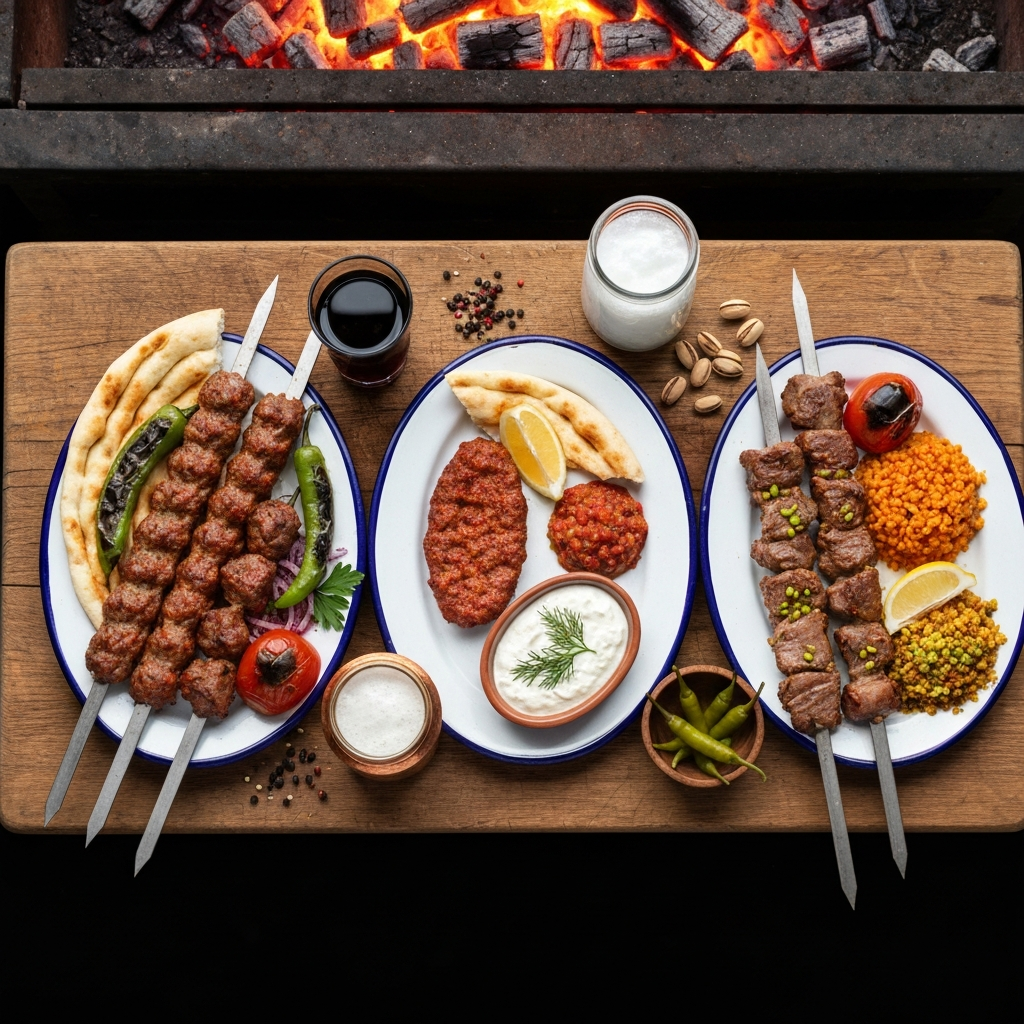
Kebab in Turkish is a wide word — it covers a couple of dozen distinct preparations across at least as many regional traditions, and the version most people have eaten outside Turkey (mass-produced döner on a vertical spit, served on bread with iceberg and a generic chilli sauce) is the genre's least interesting member. Real Turkish kebab is regional, ingredient-specific, and almost always cooked over kömür — hardwood charcoal — at an ocakbaşı, the open-grill rooms where a single grill master works a long horizontal coal bed with a row of flat skewers. The kitchen is the dining room. The smoke is the seasoning.
There are dozens of regional kebab styles in Turkey, but three of them appear over and over on Istanbul menus, and being able to tell them apart is the single biggest upgrade you can make to a week of eating here. The names are usually geographical: Urfa (short for Şanlıurfa, the southeastern Anatolian city near the Syrian border), Adana (the Mediterranean city to its west), and Antep (short for Gaziantep, the pistachio capital of Turkey, further west again). Each one has a defining technique, a defining ingredient, and a defining heat level. Once you know what to look for, you can read a kebab menu almost the way you read a wine list.
What kebab isn't is a single dish. "Best kebab in Istanbul" is the wrong question by one degree — the right question is "best version of which kebab," and the answer changes by style.
The three regional styles that matter
1. Şanlıurfa-style (Urfa kebabı)
The defining feature of the Urfa kebab is restraint with heat. The mince is a relatively coarse lamb mince with a moderate fat-to-meat ratio, seasoned with paprika and Aleppo pepper (isot biber, the sun-dried, oil-cured chilli flake that Şanlıurfa produces by the tonne), salt, onion. No chilli heat — Urfa is the mild-spicy member of the family, all smoke and ripe-paprika depth, not fire. Shaped by hand onto a flat skewer and grilled over hardwood charcoal at a steady high heat. Served on a piece of warm lavaş (the thin charred wheat flatbread the bread is laid directly on the grill to absorb the drippings), with charred Turkish long green peppers, a grilled tomato half, and sumac-dressed sliced raw red onion with parsley alongside.
The reference room in Istanbul for the Urfa-region cuisine is Hamdi Restaurant on Tahmis Caddesi in Eminönü — a five-floor institution whose founder Hamdi Arpacı came to Istanbul from Şanlıurfa in the 1960s and built what is now the most-photographed kebab room on the historic peninsula. Eat upstairs. The top-floor dining room has a wraparound view of the Galata Bridge, the Yeni Cami's domes, and the Bosphorus — arguably the best dinner view in the old city. Order the fıstıklı kebab (their version, pistachio-bound, sits half-way between Urfa and Antep) and a plate of Urfa kebab side by side for the contrast. Add the çiğ köfte (raw bulgur with paprika and walnut, the regional starter) and a long meze table to open. The kitchen also runs the strongest baklava cart of any kebab room on the peninsula.
2. Adana-style (Adana kebabı)
The defining feature of the Adana kebab is chilli heat and tail fat. The mince is finer than Urfa — hand-chopped with a long curved knife called a zırh until it's almost a paste — and bound with rendered lamb tail fat (kuyruk yağı), which gives the kebab its glossy, slightly slick texture. The seasoning is one ingredient: pul biber, the bright red Mediterranean chilli flake from around Adana itself, used in volumes that turn the mince a vivid uniform red. The kebab is formed long and thin on a wide flat skewer, the fat dripping onto the coals and flaring as it cooks. Served on lavaş with a wedge of charred lemon, a small bowl of cacık (cucumber-yoghurt-mint dip), and a plate of sumac onion. Real Adana should be hot — not burning, but warm enough to slow you down on the second bite. Eaten with hands.
Adana kebab is on the menu of almost every ocakbaşı in Istanbul, including Ali Ocakbaşı Sirkeci on Hocapaşa Sokak (the Sirkeci kebab lane behind the old Orient Express station) and Develi Kebap Sirkeci on Hocapaşa Mahallesi a few doors away. Bab-ı Hayat, the sit-down kebab room inside the Spice Bazaar, is the version to order when you want the kebab in a beautiful 17th-century vaulted hall rather than a modern dining room. The dish travels well across rooms, but the version is only as good as the grill master's commitment to the chilli — if the kebab arrives pale and docile, the room isn't a real ocakbaşı, whatever the sign says outside. The longer treatment of Adana — the zırh question in detail, the Maraş pepper, the mild Urfa sister, and the four canonical Istanbul rooms — is in the What is Adana kebab? primer.
3. Gaziantep-style (Antep / fıstıklı kebab)
The defining feature of the Gaziantep kebab is pistachios. Antep is the pistachio capital of Turkey — the Antep pistachio (Antep fıstığı) is to Turkey what San Marzano tomato is to Italy, smaller and greener and intensely floral compared to the Iranian or Californian variety — and the city's regional kebab is built around them. The mince is butter-rich lamb mixed with crushed and whole Antep pistachios, formed into long sausages on a wide flat skewer, and grilled until the pistachios brown faintly at the surface. The seasoning is light — the kebab is meant to taste of pistachio, butter, lamb, in that order — and the dish almost always arrives with a side of bulgur pilavı rather than rice, plus a small ceramic dish of ezme (the chopped-by-hand chilli-tomato-onion relish that is the southeastern version of salsa) and a wedge of lemon. The bread is lavaş; the drink is ayran.
The reference room in Istanbul for Gaziantep cooking is the Develi dynasty. Develi Etiler on Nispetiye Caddesi in Beşiktaş is the original Istanbul location, run by the same family for decades, and the kitchen is the closest thing to eating in Gaziantep without leaving the city. Develi Kebap Sirkeci is the historic-peninsula sister with the same menu and a more central address. Order the fıstıklı kebab as the main, the lahmacun (paper-thin flatbread topped with minced lamb, parsley, lemon, and a dusting of chilli) as the starter, and the künefe (shredded-pastry-and-cheese dessert in syrup, served sizzling hot) to finish. Order one künefe between two; it is not a small dessert. The longer treatment of the dish — the southern Antakya origin, the cheese-stretch chemistry, and the four canonical Istanbul rooms — is in the What is künefe? primer.
The Erzurum bonus you should not miss
4. Cağ kebabı
Outside the southeastern triangle, one more regional kebab earns its place on an Istanbul visit: cağ kebabı, the Erzurum-style horizontal-spit kebab from the eastern highlands. The technique is the opposite of the döner that everyone has had outside Turkey: instead of meat stacked vertically and shaved off in dry slivers, cağ kebabı stacks marinated lamb horizontally on a long iron spit perpendicular to the heat, rotates it slowly over hardwood charcoal, and shaves thick juicy slices straight onto a piece of warm lavaş on your plate. The marinade is twelve to twenty-four hours of yoghurt, onion juice, salt and pepper — no other seasoning — and the result is a kebab that tastes of three things: lamb, charcoal, and time. Served with roasted Turkish long green peppers, sumac onion, and parsley.
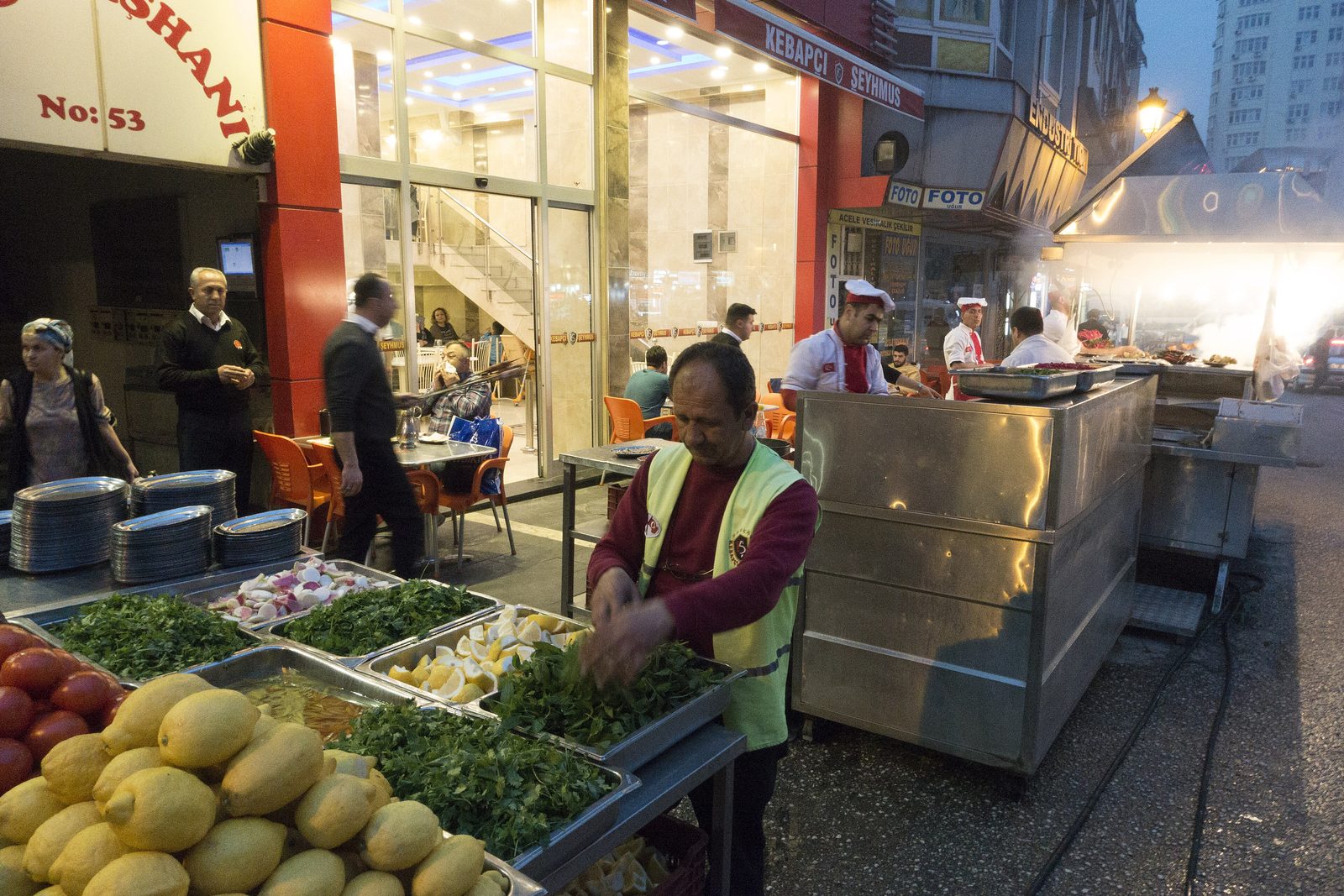
The Istanbul reference for cağ kebabı is Şehzade Cağ Kebabı on Hüdavendigâr Caddesi in Sirkeci, a small, busy, fluorescent-lit room four minutes' walk from the old Orient Express station. The kebab is sold by the skewer; two skewers per person is the standard order, three if you skipped breakfast. Eat with your hands. Add a glass of cold ayran and a small bowl of soup if it's cold. There is almost no other menu and there doesn't need to be. The longer treatment of the dish — the horizontal-vs-vertical-spit reveal, the Erzurum origin, and how to tell a great cağ from a mediocre one — is in the What is cağ kebabı? primer.
The köfte exception
Strictly speaking, köfte isn't a kebab — it's a hand-shaped grilled meatball, no skewer — but no honest Istanbul kebab article can skip the two institutions that have been doing it for a century. The longer treatment of köfte itself — what it is, the lamb-vs-beef question, the regional spread (Sultanahmet, İnegöl, Tekirdağ, Akçaabat, Adana) and the four canonical Istanbul rooms — is in the What is köfte? primer. Tarihi Sultanahmet Köftecisi on Divanyolu Caddesi, open since 1920, is the Istanbul köfte address most visitors actually know: marble tables, fluorescent lighting, a short single-dish menu of grilled köfte with white-bean piyaz, pickled chillies, charred peppers, and bread that arrives hot. Tarihi Beşiktaş Köftecisi on Çarşı Caddesi in Beşiktaş is the European-shore counterpart — same plate, different neighbourhood, equally defended by locals. Order a glass of cold ayran and a charred green pepper; that's the meal. Both rooms are an eight-minute service from a hundred years of practice.
What to ask for at the counter
A correct kebab order at an ocakbaşı in Istanbul looks roughly like this:
- One starter: çiğ köfte (raw bulgur with paprika and walnut, southeast Anatolian — most ocakbaşı make it vegetarian-by-default now) or lahmacun (the paper-thin flatbread with minced lamb, eaten with lemon and rolled up like a cigar).
- Bread and meze: a small order of ezme (the chopped chilli-tomato relish) and a small plate of sumac onion with parsley. Lavaş on the side, warm, torn into pieces by hand.
- One kebab per person: not two. The portions in a real ocakbaşı are generous. If you want to taste more than one style, order one of each between two people and share rather than ordering two for one person.
- Drink: ayran (yoghurt drink, lightly salted) is the classical pairing. Cold water is correct too. Beer and rakı work but are unusual at lunch; rakı is more an evening-fish-meyhane drink than a kebab drink.
- To finish: a piece of künefe if it's on the menu, a glass of black çay always. If the room has a baklava cart, one piece of fıstıklı baklava to share. See the best-baklava post for where to walk afterwards if you want the dynasty version.
When to walk past
The kebab room you should walk past is the one that signals tourist-trade from the street: laminated multilingual menus with photos in the window, a "kebab platter" listing that includes rice and fries, a tout outside trying to sit you down. Almost all of these rooms exist on or immediately around Divanyolu Caddesi in Sultanahmet and on İstiklal Caddesi in Beyoğlu. They are not necessarily bad — but they are almost never the version of the dish that Istanbullular would eat themselves, and the rooms named above are within a fifteen-minute walk of either street. Cross the threshold instead.
Also worth noting: the rotating vertical döner-on-a-spit, sliced into a sandwich and handed across a counter, is its own genre. There are excellent versions of it in Istanbul — Bereket Döner Sirkeci on Hocapaşa Sokak is the working-lunch version Sirkeci office workers actually queue for — but it isn't what the rest of this post has been about. The skewered-over-charcoal kebab is a different dish entirely, and the tourist confusion between the two is exactly what this post exists to undo.
How to pair this into a trip
A working sequence for a kebab-heavy Istanbul day, drawn from the Istanbul Kebab Trail walking tour in the app — Şanlıurfa kebabs on Hamdi's Eminönü rooftop, the 1920 köfte on Divanyolu, Erzurum cağ kebabı in Sirkeci, wood-fired pide in the Hocapaşa alley, and the Gaziantep dynasty Develi in Etiler for the closing künefe:
- 12:30 pm — lunch in Sirkeci. Şehzade Cağ Kebabı for the Erzurum-style horizontal-spit lamb. Two skewers per person, ayran, charred peppers, sumac onion. Twenty minutes, twenty lira if you keep it tight.
- 3 pm — afternoon stop at the Spice Bazaar. Walk into the Mısır Çarşısı for spices, lokum, and a small plate of kebab at Bab-ı Hayat inside the bazaar if there's room — the version is modest but the room is one of the most beautiful in the city.
- 8 pm — dinner with a view. Hamdi Restaurant upstairs for the Şanlıurfa-region menu — long meze, çiğ köfte, fıstıklı kebab, lahmacun, baklava — at a window table over the Galata Bridge. Or, for the Gaziantep version, Develi Kebap Sirkeci in the historic peninsula or Develi Etiler in Beşiktaş for a longer ride out to the original Istanbul Develi room.
The full route, with stop-by-stop notes, is in the Taste Istanbul app. The walking food tours meta-guide sorts the kebab trail alongside the city's fifteen other walks.
The short version
Urfa is the smoky, paprika-forward, mild-spicy one — Hamdi in Eminönü. Adana is the chilli-and-tail-fat, hot, glistening one — the standard at any real ocakbaşı; try Ali Ocakbaşı Sirkeci. Antep is the pistachio-and-butter, gentle, ingredient- led one — Develi in either Sirkeci or Etiler. Cağ kebabı, from Erzurum, is the horizontal-spit lamb with twelve hours of yoghurt marinade — Şehzade Cağ Kebabı in Sirkeci. And köfte, even though it isn't a kebab, is Tarihi Sultanahmet Köftecisi on Divanyolu since 1920.
Order one of each across a week. Don't pair them with rice and chips. Use lavaş. Drink ayran. Eat the bread. Walk afterwards.
The full kebab trail is in the app.
Five named stops, mapped, with the one or two specific things to order at each. Free, offline, no sign-in. Plus 230+ more venues across the rest of the city.
Download free on the App Store