Where to eat in Beyoğlu
A walking food guide to Istanbul's bohemian heart — where to find the best kokoreç, profiterol, lokum, and the meyhane mezes that anchor a proper rakı evening. Hand-picked. No user reviews. No paid placements.
What Beyoğlu is, and isn't
Beyoğlu is the long ridge above the Galata waterfront — the district that became Istanbul's cosmopolitan European quarter in the 19th century and never quite stopped being it. İstiklal Caddesi, the kilometre-long pedestrian boulevard that runs its spine, is still the most walked street in Turkey: a daily migration of Istanbullular that begins in the morning at Tünel and ends, somewhere past midnight, at Taksim Square. Off it, in a tangle of 19th-century arcades and late-Ottoman apartment blocks, hide the meyhanes, kokoreççis, muhallebicis, profiterol counters and Art Nouveau patisseries that make Beyoğlu the most concentrated food neighbourhood in the city.
What Beyoğlu isn't is monumental. There is no Hagia Sophia here, no Topkapı, no Grand Bazaar. Beyoğlu's pleasures are smaller and more domestic: a tray of warm fırın sütlaç in a 1935 patisserie, a glass of cloudy rakı at a corner table on Nevizade Sokak, a paper-wrapped kokoreç sandwich eaten standing at a marble counter at one in the morning. The neighbourhood doesn't hand its best moments to first-time visitors. You have to know which doors to push.
This guide names them. Every venue below has been chosen for one of four reasons: deep generational heritage in a specific Beyoğlu food tradition, technical excellence in one dish, a setting that is itself a reason to visit, or a role in the modern Anatolian kitchen now being built here. There are no paid placements. There are no user reviews to weigh. There is one editor's opinion, transparently stated.
🗺️ Want this as a walking tour?
The five-stop walking tour — Beyoğlu Street Bites — runs İstiklal Caddesi from afternoon muhallebi at Saray Muhallebicisi through Art Nouveau profiteroles at Markiz Patisserie, the 1876 Çiçek Pasajı arcade, and midnight kokoreç on the backstreets, ending with rakı at the Armenian meyhane Boncuk on Nevizade Sokak. For the fine-dining counterpoint, the Istanbul Fine Dining Crawl starts here too — Mehmet Gürs's Mikla on the Marmara Pera rooftop and Civan Er's Yeni Lokanta on Kumbaracı Yokuşu are both Beyoğlu addresses. Read the full stop-by-stop on the tour landing pages, or download the free app for the offline-mapped version.
Download Taste Istanbul on the App StoreThe five things to eat in Beyoğlu
1. Kokoreç (charcoal-grilled lamb intestines, in bread)
The neighbourhood's signature street food, and the dish most associated with Beyoğlu nightlife. Real kokoreç is seasoned lamb intestines wrapped tight around a horizontal spit, slow-grilled over charcoal until the outside lacquers and crisps, then chopped on a marble counter with diced tomato, dried oregano and chilli flakes and packed into half a crusty loaf. It is at once confronting and magnificent. Şampiyon Kokoreç on Sahne Sokak in the Balık Pazarı has been carving the same sandwich since 1977 and is the dish's reigning specialist; the slightly tougher, slightly more iconic version is at Tarihi İstiklal Kokoreçcisi in the backstreets just off the boulevard. Both are standing-room only and both peak well after midnight.
2. Profiterol, the Beyoğlu way
Beyoğlu's profiterol is its own dish — a pile of small choux puffs drowned in a glossy, still-warm chocolate sauce that is bitter rather than sweet and never fashionably bittersweet. The recipe was perfected by an Albanian-founded patisserie called İnci Pastanesi in 1944 and has been more or less the same ever since: a small cup, a paper napkin, a long spoon, and the faint surprise that the sauce is properly hot. You eat it standing, and you order seconds. İnci's original İstiklal address was lost to a development a decade ago; the institution now anchors the corner of Mis Sokak.
3. Meze and rakı in a Nevizade meyhane
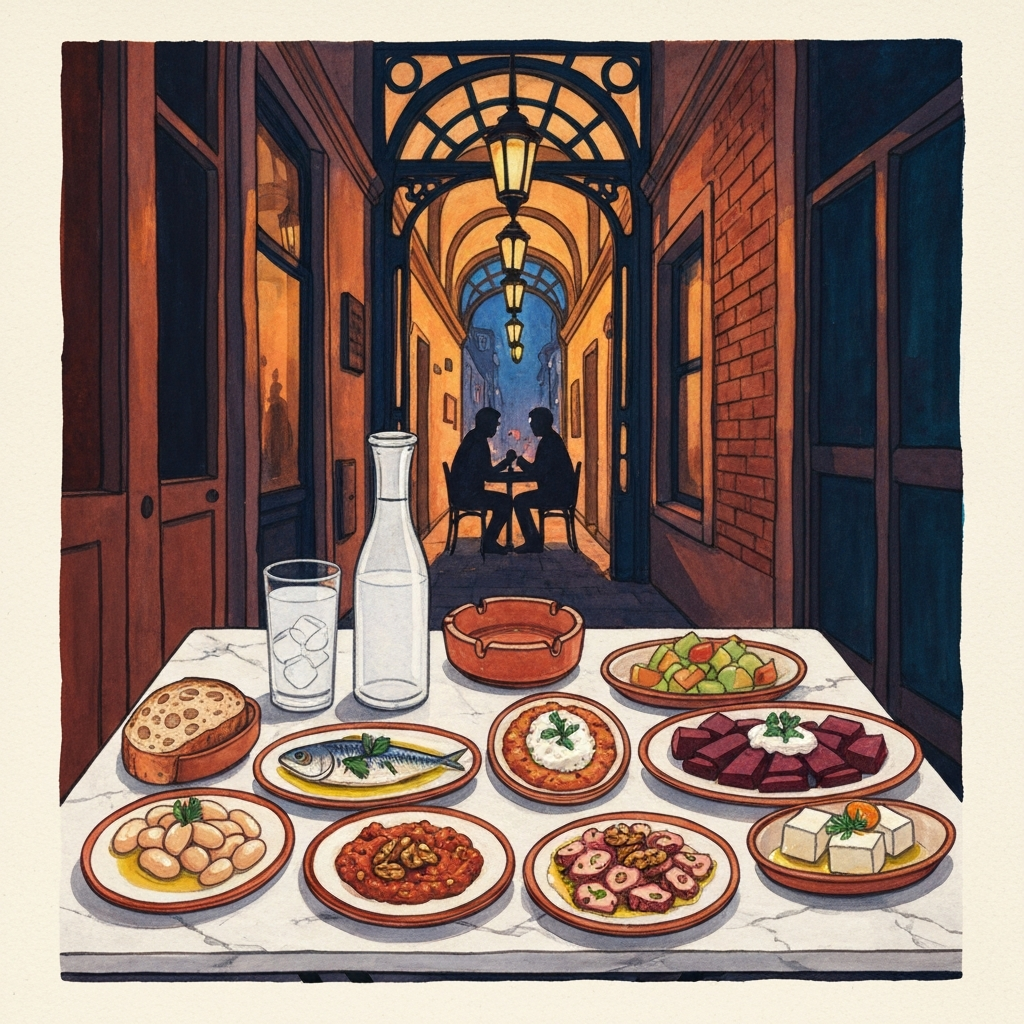
A meyhane is a tavern, but the word doesn't quite translate. It is a place built around the slow, ritual procession of cold mezes — haydari, fava, lakerda, tarama, octopus salad, smoked aubergine — eaten in small plates over hours, accompanied by carafes of rakı, the anise-infused spirit that turns cloudy white when water is added (Turks call it the lion's milk). The geographic centre of meyhane culture is Nevizade Sokak, a single cobbled lane two minutes off İstiklal lined with thirty establishments. Boncuk Restaurant, an Armenian-rooted institution since the 1960s, is famous for its red-pepper spreads and lakerda; İmroz Restaurant nearby is the Rum (Greek-Orthodox) counterpart, defined by its octopus salad and white-wine carafes. Çiçek Pasajı, the Cité de Péra arcade built in 1876, runs a row of historic meyhanes under an iron-and-glass barrel vault and is worth visiting for the architecture alone. For a quieter, more literary alternative, walk west to Asmalımescit and find Refik Restaurant (since 1954) or Yakup 2 Restaurant (since the 1970s).
4. Muhallebi and the milk-pudding counter
Beyoğlu still keeps its old muhallebicis — the standing-room counters that specialise in milk-based puddings. The genre is broad: silky muhallebi perfumed with rose water, kazandibi with its burnt-caramel base, baked rice fırın sütlaç finished under a broiler, and the strangely brilliant tavuk göğsü, a milk pudding made with shredded chicken breast (don't be put off; it has no chicken flavour and a remarkable texture). Saray Muhallebicisi on İstiklal has been pouring puddings since the 1950s; its larger sibling Saray Pastanesi, on the same boulevard since 1935, also runs a full Ottoman pastry counter with su böreği and warm sahlep in winter. Order at the counter, take a tray upstairs.
5. Hand-cut lokum at the inventor's shop
Industrial lokum in pastel colours sells from every souvenir shop on İstiklal. The slow-cooked, hand-cut original is at Ali Muhiddin Hacı Bekir at İstiklal Caddesi No. 83 — the confectionery house founded in 1777 by the man who is generally credited with inventing Turkish delight for the Ottoman court. The shop still produces its rose-water, double-roasted pistachio and pomegranate varieties using the same 18th-century copper pans, and the wood-panelled retail counter is almost unchanged from the 19th century. If a piece of lokum is a brilliant pink or has a translucent rainbow finish, it isn't from here. Walk past.
The modern Beyoğlu kitchen
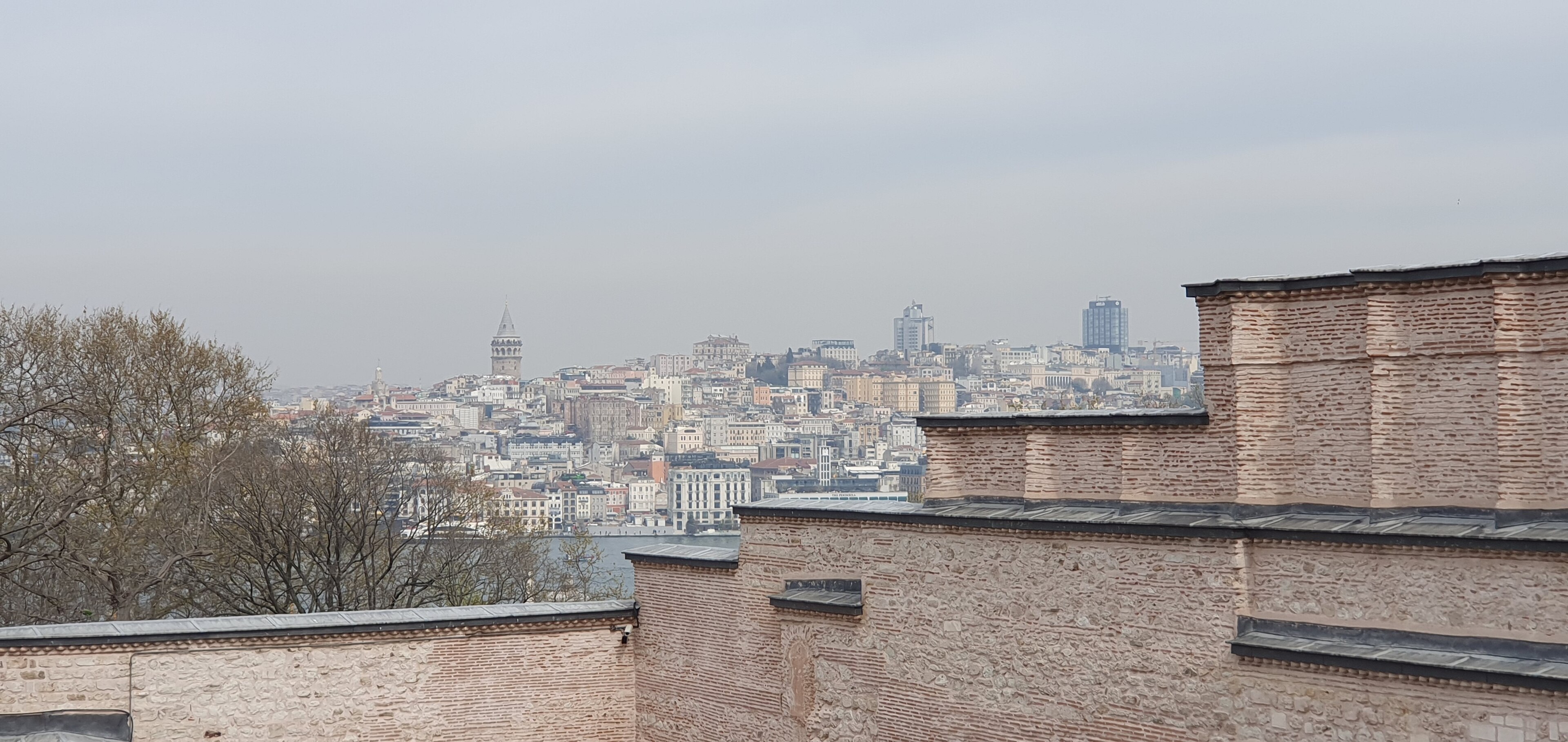
Beyoğlu is also where contemporary Turkish fine dining was invented. Mikla, on the rooftop of The Marmara Pera, has been chef Mehmet Gürs's laboratory for "New Anatolian" cuisine since the early 2000s, and remains the most internationally respected fine-dining address in the country — ancient grains, Aegean herbs, fermented dairy and slow-aged lamb, served with a 360-degree panorama of the old city, the Bosphorus and the Golden Horn. Neolokal, in the SALT Galata cultural centre — a former Ottoman bank — is chef Maksut Aşkar's research kitchen for nearly forgotten Anatolian dishes; the vegetarian tasting menu is one of the strongest in the city. Yeni Lokanta on Kumbaracı Yokuşu is chef Civan Er's confident reinterpretation of meyhane and lokanta classics, served family-style with one of Istanbul's best natural Turkish wine lists. These three are the modern reference points, and all three are on this guide because each one earned its place by being technically excellent in a tradition it actually respects.
How to plan a day around food in Beyoğlu
Beyoğlu is best eaten across an afternoon and an evening rather than a full day. The boulevard is short, the backstreets are dense, and the best hours are between 4pm and midnight. A working sequence, drawn from the Beyoğlu Street Bites tour in the app:
- 4 pm. Begin at Saray Muhallebicisi on İstiklal for a bowl of kazandibi — the caramelised, slightly burnt milk pudding is the test of any pudding-master and Saray passes every time. Eat standing at the marble counter while the boulevard's afternoon crowd flows past.
- 5 pm. Walk five minutes south to Markiz Patisserie, the early-20th- century Art Nouveau café whose interior — curved mouldings, period tilework, original light fittings — is one of Istanbul's most beautiful. Order a filter coffee and a profiterol.
- 6 pm. A two-minute walk takes you into Çiçek Pasajı, the 1876 arcade and its row of historic meyhanes. A cold beer at the bar under the iron-and-glass vault is the traditional pre-dinner ritual.
- 9 pm. Detour into the İstiklal backstreets for the late-evening Tarihi İstiklal Kokoreçcisi sandwich. Eat it standing.
- 10 pm. End at Boncuk Restaurant on Nevizade Sokak. Order the house rakı, dilute with cold spring water, watch it cloud, and let the parade of cold mezes begin. Strolling musicians arrive around eleven.
The full route is mapped in the Taste Istanbul app with walking directions, distances and per-stop notes — free, offline, no sign-in.
Other districts to combine with Beyoğlu
Beyoğlu is the modern half of central Istanbul. A well-planned three-day food trip pairs it with:
- Karaköy — five minutes downhill at the foot of Galata, the city's best meze and specialty coffee, plus the legendary baklava dynasty Karaköy Güllüoğlu.
- Sultanahmet — across the Galata Bridge, Istanbul's old city, where to find Ottoman dawn breakfasts, Sultanahmet köftesi, and the 1664 Egyptian Spice Bazaar.
- Kadıköy — a 20-minute ferry across the Bosphorus to the Asian side, home to Çiya Sofrası and the city's most eclectic produce market.
- Beşiktaş — fifteen minutes northeast on the Kabataş tram or funicular, the dense working stretch of the European Bosphorus shore: the Çarşı fish market, Van-style kahvaltı, and the Çırağan Palace dining room.
- Eminönü — down the Galata hill and across the bridge, the old commercial waterfront. The 1664 Spice Bazaar, the balık-ekmek boats, and Pandeli's 1901 dining room above the bazaar gate.
- Nişantaşı — ten minutes north up the Taksim hill, the polished half of central Istanbul. The Teşvikiye pâtisserie row, Kantin's contemporary Turkish kitchen, the Beymen Brasserie axis on Abdi İpekçi, and the steakhouse cluster that includes the Salt Bae original.
The full guide is in the app.
Every venue named here, plus 25+ more across Beyoğlu alone — and 230+ across the rest of the city — is mapped, addressed, and walked in the free Taste Istanbul app.
Download free on the App Store