What is boza? The 1876 Vefa drink Istanbul still pours
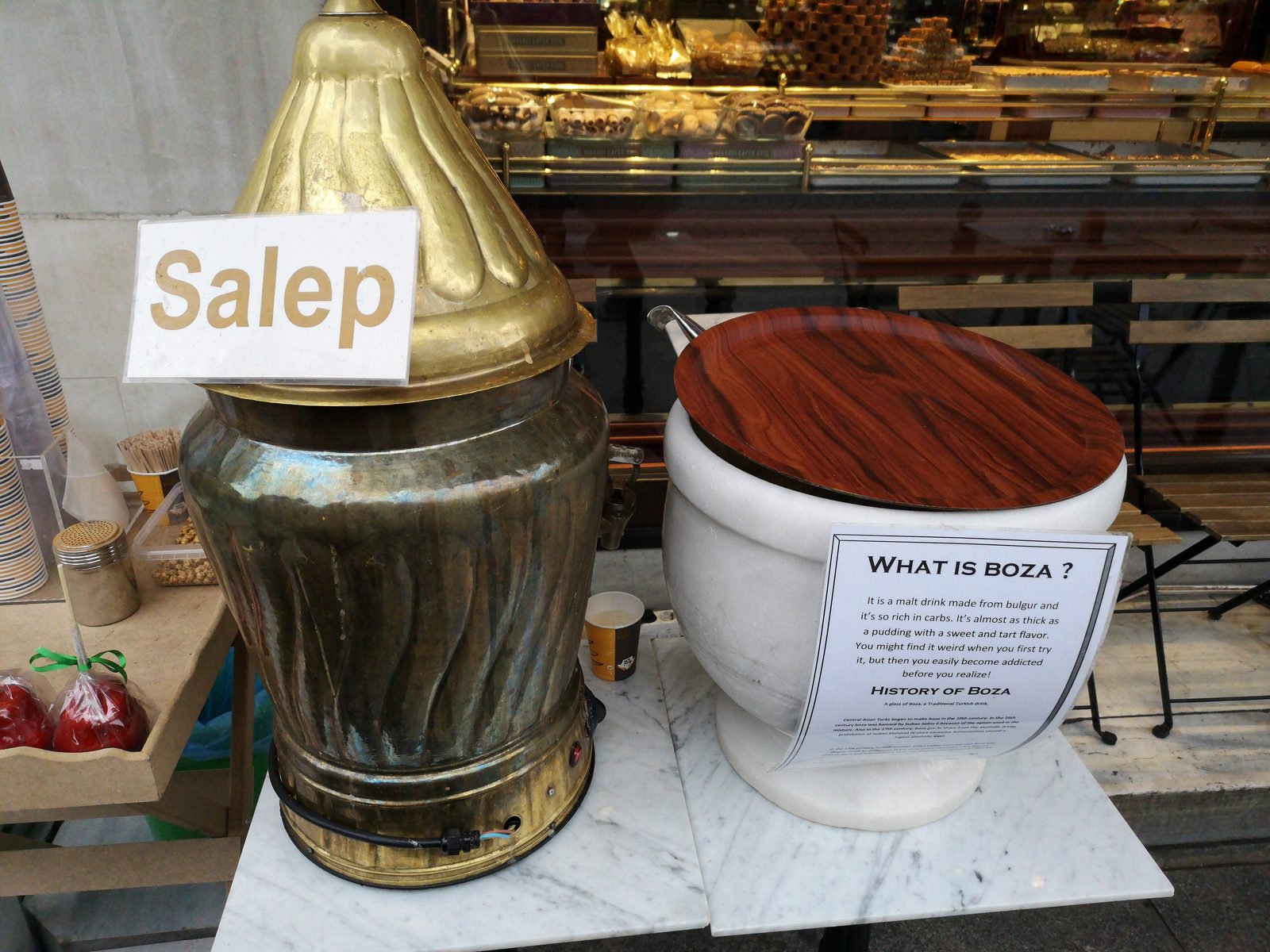
Boza is a slightly-fermented cooked-millet drink — thick, ivory-coloured, very faintly fizzy, served cold in a tall glass, dusted with cinnamon and topped with a small spoon of roasted chickpeas (leblebi). It is the oldest beverage continuously poured in Istanbul, predating the Ottoman period, and the reference room — Vefa Bozacısı, opened in 1876 — is still in business in the same Vefa neighbourhood, behind Süleymaniye, on the same marble counter, with Atatürk's preserved tasting glass behind it. Here is what boza is, what it tastes like, why it's a winter drink, and the room that defines it.
The short answer
Boza (pronounced BOH-zah) is a cold drink — almost more of a thick beverage-porridge than what Westerners think of as a drink — made from cooked, lightly fermented millet (sometimes wheat, depending on the region). The grain is boiled into a thick mash, sweetened with sugar or honey, then inoculated with a small starter culture and left to ferment for a day or two at cool temperature. The ferment is mild — it produces a faint natural fizz, a low residual sweetness, and an alcohol level too low to register on most labels (typically well under 1%). The finished boza is the colour of fresh oat milk, the texture of a slightly fizzy thin porridge, and the taste of a slightly tangy sweet-and-sour drink with a tang at the back of the throat. It is poured cold into a tall glass tumbler, dusted heavily with ground cinnamon on top, and served with a small spoonful of crunchy roasted chickpeas (leblebi) floated on the surface or alongside in a separate dish.
You drink it with the spoon: take some of the cinnamon surface and a leblebi or two on each sip. The drink sits in the same culinary register as kefir, kombucha, or the cooked-grain drinks of the Caucasus — a fermented-grain beverage that hovers on the edge of being a food. It is the oldest non-alcoholic drink documented in Istanbul cuisine, and one of the very few that has survived in continuous commercial pour from the Ottoman period to the present day.
What makes boza different from anything Western
Three things. First, it's poured rather than drunk — the consistency is thick enough that you don't drink it fast like a beverage; you sip it slowly between bites of cinnamon and chickpea. A glass takes ten or fifteen minutes to finish, and that pace is the point.
Second, it sits at the edge between food and drink. A glass of boza is enough to count as a small meal — the millet base is substantial, the natural sugars carry real energy, and a winter bowl of it functions as sustenance more than refreshment. Historically boza was prescribed by Ottoman physicians as a winter food for soldiers, breastfeeding mothers and convalescents. The modern shop still pours it largely to neighbourhood regulars who treat it as a daily ritual.
Third, it's not sour in the way fermented Western drinks are. The ferment is deliberately mild — boza has a tang at the back of the throat but the dominant flavour is sweet-grain and cinnamon, not sourness. A cold glass tastes something like a cinnamon-dusted oat milk that's been standing on the counter for a day. Closer to a meal than to a soda.
The fermentation question — and the alcohol question
Boza is technically a fermented drink, which means a small amount of alcohol exists in the finished glass — typically 0.5–1.5%, well below the 5% threshold for beer. This is enough to register a hint on the breath but not enough to count as an alcoholic beverage in any legal sense, and boza is sold and consumed freely as a non-alcoholic drink throughout Turkey, including by religiously observant Muslims who don't drink alcohol. The Ottoman legal tradition distinguished between tatlı boza (sweet boza, very lightly fermented, fully halal) and acı boza (sour boza, more fermented, historically a thirstier man's drink and treated as edge-case alcoholic). The Vefa shop and almost every surviving Istanbul bozacısı pour the sweet version only; the sour version is essentially extinct.
The ferment also gives boza its texture. The mild bacterial-and-yeast culture (similar to the cultures used in kefir) produces a small amount of carbon dioxide that gives the drink its faint fizz, and the enzymes break down the millet starches into the smoother, slightly tangy mash that defines the finished glass. A boza that hasn't been fermented at all is just cinnamon-sweetened millet porridge — edible, but not boza.
Why it's a winter drink
Boza is served only in the cold months — October through April in Istanbul. The seasonality is partly practical (the drink ferments at cool temperatures and was historically hard to keep stable in summer without modern refrigeration), partly cultural (Istanbul winters were the season of long indoor meals and warming foods, and boza fits that register), and partly ritual (a glass of boza in January is the canonical late-evening winter indulgence, the way sahlep — the orchid- root hot drink — is the canonical morning one).
From May through September, the same shops that pour boza switch to vişne şerbeti — sour-cherry sherbet, an unfermented chilled syrup made from Anatolian sour cherries, water and sugar, served in the same glass with the same crushed leblebi dusting. The two together cover the full Istanbul year. If you walk into Vefa Bozacısı in July expecting boza you'll get the sour-cherry sherbet instead. Both are right; both belong to the room. The seasonality is the reason the experienced visitor calls ahead in early autumn or late spring to ask which one is pouring that day.
Where to drink boza in Istanbul — Vefa Bozacısı 1876
There is one canonical Istanbul boza room. Vefa Bozacısı opened at Katip Çelebi Caddesi No. 104, in the Vefa neighbourhood of Fatih (behind Süleymaniye Mosque, west of the old city) in 1876, and is still open in the same shop, on the same marble counter, with the same family running it. The room is small and almost untouched: a long marble bar on the right as you enter, brass-and-glass jars of cinnamon and crushed leblebi on the back shelves, century-old sepia photographs of the founding family on the wall, and — behind glass on the back wall — the preserved tasting glass that Mustafa Kemal Atatürk drank from in 1937, inscribed and dated. The boza is poured straight from a refrigerated tap into a tall straight-sided glass tumbler, dusted with cinnamon at the bar, and served with a small dish of leblebi on the side.
The shop is a 15-minute walk west of Sultanahmet, into the Vefa neighbourhood — the historic quarter around Süleymaniye and the old Istanbul University. It opens late afternoon and runs into the evening; it closes for the summer (May–September) for the sour-cherry sherbet season; and it is also the closing stop of the Sultanahmet Sweet Tooth walking tour, which traces an afternoon-into-evening arc through the old city's dessert and sweet institutions ending on the boza glass at Vefa as the light goes over Süleymaniye. The best-Turkish-desserts blog post has the longer treatment of boza as the dessert- adjacent honorary entry in the Turkish sweet catalogue.
A note on the wider Istanbul scene: a handful of smaller bozacısı rooms exist in the city — most notably in the working neighbourhoods of Fatih and Eyüp — but they are seasonal, family-run, and serve primarily the local regulars. Vefa Bozacısı is the one room with the historic continuity, the architectural setting and the broader cultural standing. It is the address.
How to drink it
Step one: do not order boza in summer. The Vefa shop will not have it; another shop that does will likely be selling a refrigerated supermarket version rather than a fresh ferment, which is a different drink and an inferior one. Wait for October. Step two: at Vefa, order one glass — they come in a single standard size. Pay at the marble counter. The boza arrives already dusted with cinnamon. Step three: sit. The shop has a row of small stools and bar tables; the regulars sit. Don't take it standing.
Step four: use the small spoon that comes with the glass. Take a spoonful of the cinnamon-and-leblebi surface, eat that first, then sip the boza beneath it. The crunch of the chickpea against the thick sweet drink is the architecture of the glass. Continue this way — cinnamon-leblebi bite, sip of boza, cinnamon-leblebi bite, sip — until the glass is finished. A glass takes ten to fifteen minutes. Order a second if it's cold outside and you have time.
What to eat with it
Almost nothing. The boza is the meal. If you want a small accompaniment, the shop sells warm kurabiye (small Turkish butter cookies) at the counter — one or two are enough alongside a glass. Some regulars order a small piece of kazandibi (caramelised milk pudding) from a neighbouring pastane to eat between sips; the sweet-and-grain pairing works. The long Turkish milk-pudding tradition is in the best-Turkish-desserts blog post.
Boza is almost never paired with savoury food, never with meat, never with alcohol. The drink is its own course, treated by the regulars as an end-of-day ritual rather than a meal-accompaniment.
What's next
Boza sits inside the wider Istanbul dessert and drink catalogue covered in long form by the best-Turkish-desserts blog post, where it appears as the 1876 honorary entry alongside the seven canonical Turkish sweets (baklava, lokum, künefe, kazandibi, sütlaç, dondurma, profiterol). The Sultanahmet Sweet Tooth walking tour walks five Sultanahmet dessert institutions and closes at Vefa Bozacısı on the boza glass. The Sultanahmet district guide has the geography of the Vefa walk and the wider historic-peninsula context.
Vefa Bozacısı is in the app.
Vefa Bozacısı and 230+ other hand-picked venues across Istanbul — mapped, addressed and walked offline in the free Taste Istanbul app. No tracking pixels, no third-party analytics. Free, no sign-in.
Download Taste Istanbul on the App Store